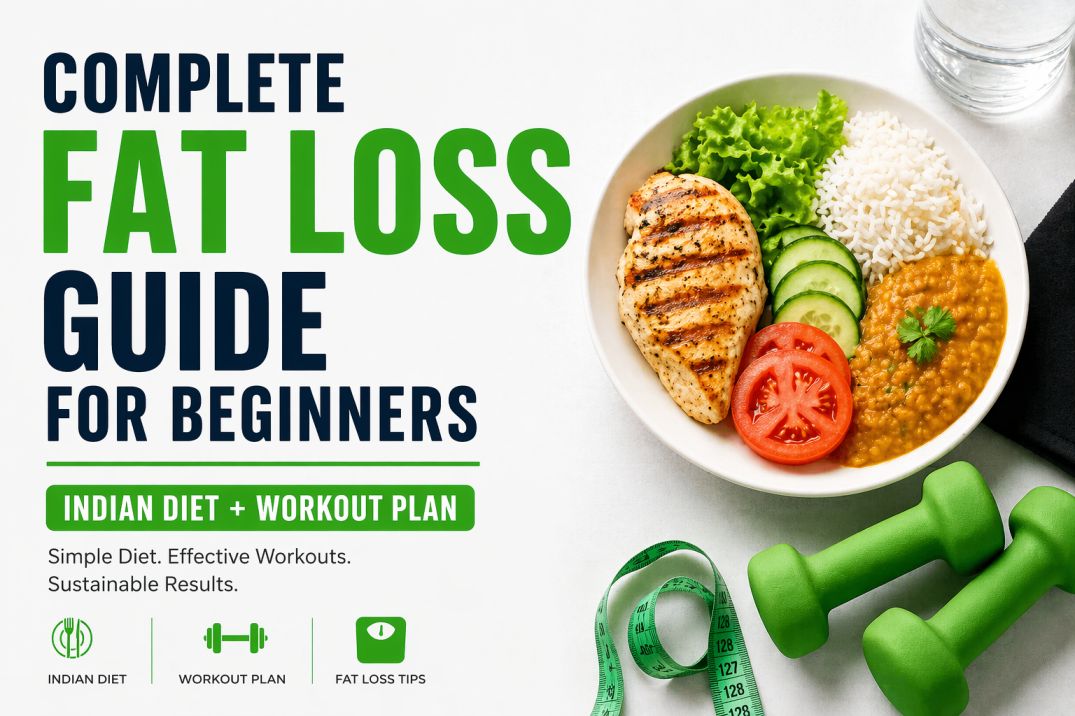
If you've read five articles about fat loss and still don't know where to start, this is the one meant to fix that. No 30-day miracle promises, no supplement stack, no "eat this one weird food." Just the actual order of operations — what matters, what doesn't, and exactly what to do first, second, and third — written specifically for someone starting from zero in India, with an Indian kitchen, Indian work hours, and an Indian budget.
The Only Math That Matters
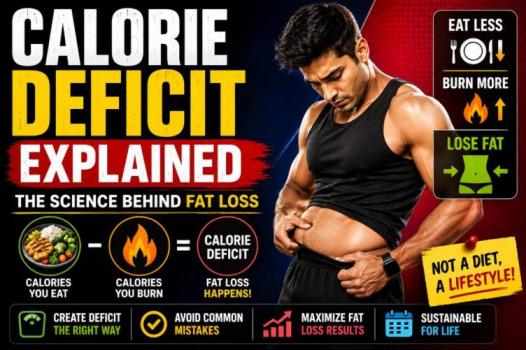
Fat loss comes down to one mechanism: you consistently eat fewer calories than your body burns. Everything else — the diet name, the meal timing, the supplement — either helps you stick to that deficit or it doesn't matter at all.
Before you touch your diet, you need two numbers: your BMR (how many calories your body burns just existing) and your TDEE (BMR plus your actual daily activity). Guessing these wrong is the single most common reason beginners either lose no weight or lose weight far too fast and burn out in three weeks. Use our free BMR and TDEE calculators to get real numbers instead of guessing — it takes two minutes and it's the actual foundation everything else in this guide sits on.
Once you have your TDEE, a deficit of 300-500 calories below it is enough. Not 1,000. Not "skip dinner." A moderate, sustainable deficit is the one you'll actually still be following in month three, which is the only kind that produces real results.
Protein Is Non-Negotiable
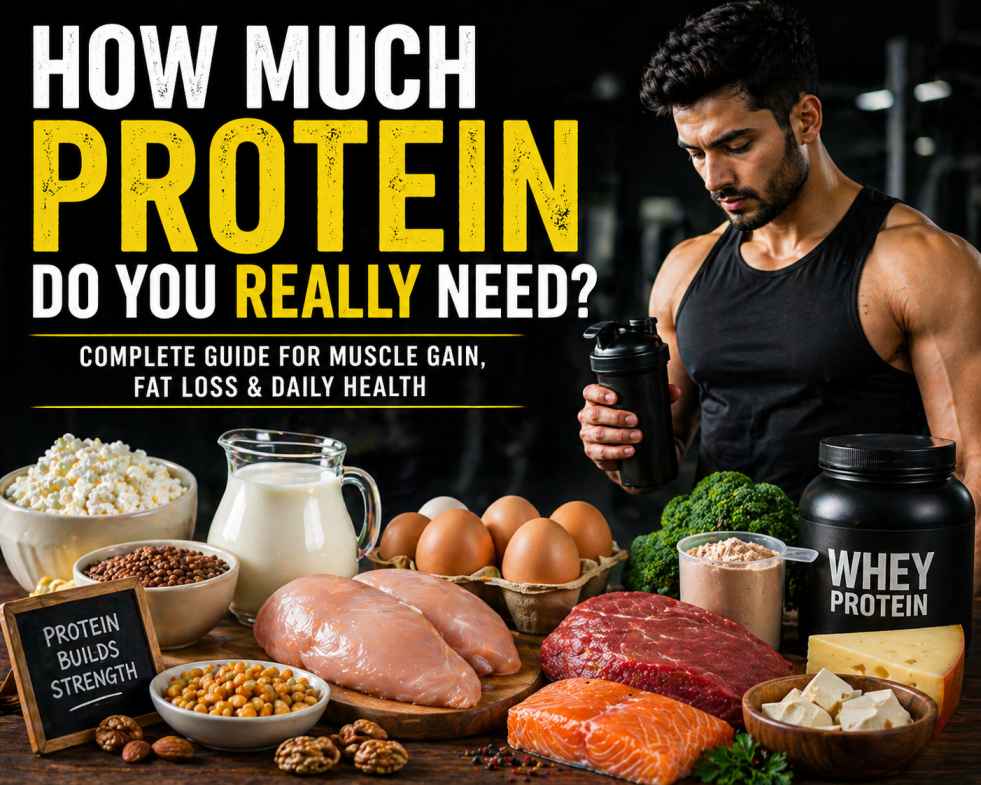
If you fix nothing else about your diet, fix your protein intake. It preserves muscle while you're in a deficit, keeps you fuller for longer on fewer calories, and is the single biggest lever for actually looking different once the weight comes off — not just smaller, but leaner.
Use our Protein Calculator to find your target based on your body weight and goal. Most beginners are eating less than half of what they actually need.
The good news: hitting a high protein target in an Indian kitchen is easier than most people think, once you know what to reach for. A few from our own recipe collection that we built specifically to make this simple — Protein Paneer Bhel for a genuinely high-protein evening snack that doesn't feel like diet food, Vegetable Besan Chilla for a fast, protein-forward breakfast, and Banana Protein Pancakes for when you want something that actually tastes like a treat.
What To Actually Eat (Indian-Specific)
Most fat loss content is written for a Western kitchen — protein powders, egg whites, chicken breast, and not much else. That's not how most of India eats, and it doesn't need to be. Dal, paneer, curd, besan, and roasted chana are all genuinely excellent, high-protein, budget-friendly foods that already exist in your kitchen.
Our full healthy recipes library is built entirely around this idea — real Indian food, restructured to hit real macro targets. And fat loss doesn't mean giving up dessert entirely either — our Chocolate Date Mousse Cake uses only dates for sweetness, no added sugar, and still fits a structured plan. If you need something fast after a workout, the Protein Smoothie Bowl takes five minutes.
The pattern that actually works long-term: pick 4-5 meals you genuinely enjoy and can make without thinking, and rotate them. Variety is nice in theory; repeatable, boring consistency is what actually gets people to their goal.
Training Basics for Beginners
You don't need a perfect program on day one. You need to show up, use real form, and progressively do a little more than last time. That's the entire model.
Start with movements that are hard to get badly wrong and that build real strength fast. Our Chest-Supported Row is a genuinely beginner-friendly back exercise with very low injury risk. Once you're comfortable in the gym, add in something like the 21s Bicep Curl or the Landmine Press to round out a simple upper-body session. Our full exercise library has step-by-step guides for dozens more, organised by muscle group, so you're never guessing at form from a random video.
Strength training while in a calorie deficit is what determines whether you end up "smaller" or actually "leaner" — it's the difference between losing weight and losing fat specifically. Don't skip it in favour of cardio alone.
Tracking Progress Without Obsessing
The scale lies to you constantly — water retention, sodium, your last meal's weight, hormonal shifts, all of it moves the number day to day with almost nothing to do with actual fat loss. Weigh yourself, if at all, no more than 2-3 times a week, and look at the weekly average, not any single day.
A more honest number is body fat percentage. Use our Body Fat % Calculator once every few weeks — not daily — to see the actual trend instead of the noise.
Common Myths That Derail Beginners
A huge amount of beginner energy gets wasted worrying about things that don't actually matter, while the things that do matter (the deficit, the protein, the consistency) get ignored. A few worth clearing up directly:
- Soy does not affect your hormones the way social media claims. We broke down the actual clinical research in Is Soy Really Bad for Hormones?
- Creatine is not a hair-loss risk for most people. The full explanation, including the actual 2009 study everyone misquotes, is in Does Creatine Cause Hair Loss?
- Lifting weights does not stunt height growth in teenagers. This one costs a lot of young Indian lifters years of progress out of pure misinformation — see Does Lifting Weights Stunt Height Growth?
None of these myths are the reason your fat loss is slow. The deficit and the consistency are almost always the real answer.
Building the Habit
None of the above works if you can't sustain it for more than two weeks. The single highest-leverage change most beginners can make isn't in their diet or their training — it's their morning. A stable, repeatable morning routine sets the tone for every food and training decision you make for the rest of the day. We wrote a full breakdown of exactly what that looks like in practice in our Simple Morning Routine for Busy Professionals guide.
When You're Ready for More Structure
Everything in this guide works on its own. But if you'd rather not build your own plan from scratch — or you've tried the DIY route before and it fell apart around week three — that's exactly what structured 1-on-1 coaching solves. You can see what that looks like on our services page.
And if you're further along already — if you've already been through your own transformation and it worked — we'd genuinely love to hear about it. Share your story and it might be the thing that gets someone else to start exactly where you did.