Let's Be Honest First
If you're reading this, chances are you've already tried something — skipped meals, followed some random YouTube diet, or pushed through intense workouts for a week before giving up. And yet, the fat didn't go anywhere.
Here's the truth nobody tells you upfront: fat loss is simple, but it's not easy. Not because the science is complicated, but because it demands consistency, patience, and clarity — three things most of us genuinely struggle with in real life.
This guide is built around the Indian lifestyle. No quinoa. No avocado toast. No imported protein bars. Just practical advice that works with your roti, dal, and evening chai.
Weight Loss vs. Fat Loss — Know the Difference
Most people say, "I want to lose weight." But what they actually mean is, "I want to look leaner, feel lighter, and get rid of this belly."
Those are not the same thing.
When you lose weight, you can lose water, muscle, and fat all together. When you lose fat specifically, you look leaner, feel stronger, and your health markers improve. So starting today, shift your goal: don't chase weight loss. Chase fat loss. The distinction matters more than you think.
The Only Rule That Actually Matters
You don't need a fancy diet. You don't need to starve yourself. You need to understand one simple concept: calorie deficit.
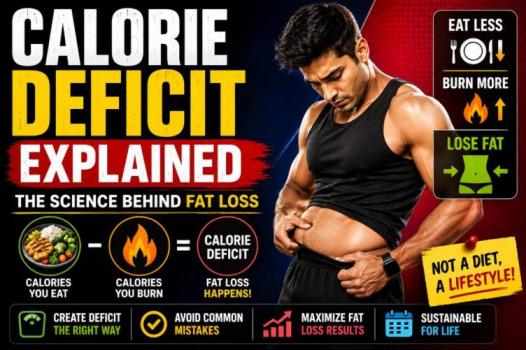
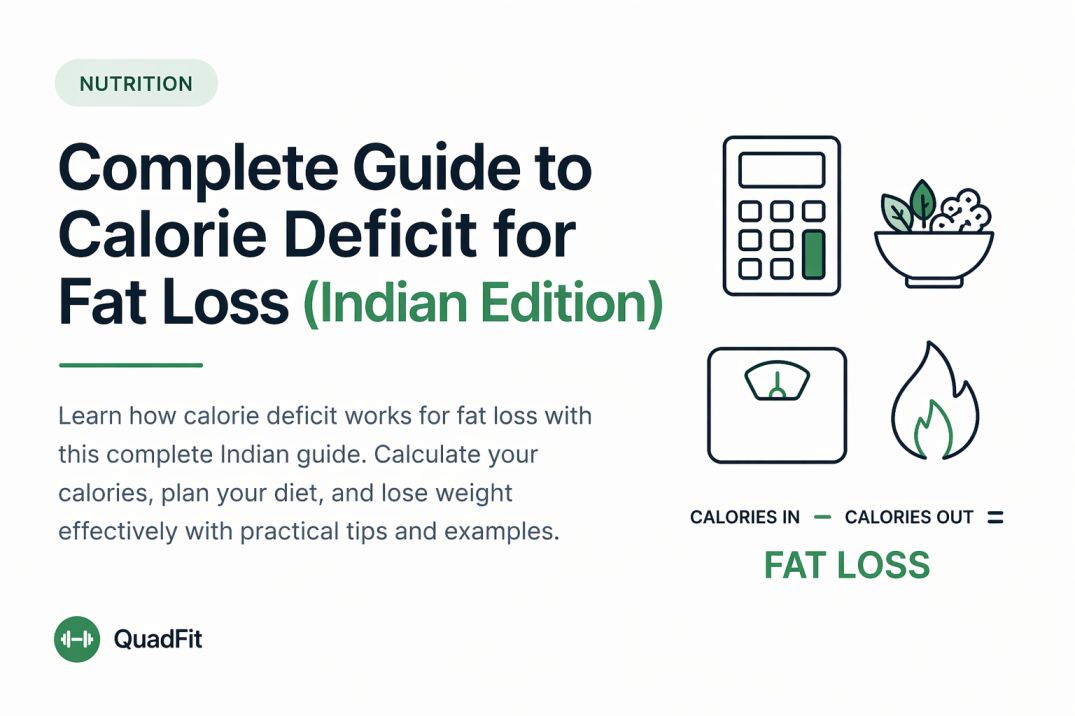
Your body burns a certain number of calories every day just to keep you alive and moving — this is called your Total Daily Energy Expenditure (TDEE). If you eat more than this number, you gain weight. If you eat less, you lose fat. That's the entire science of fat loss in two sentences.
The goal is a small, sustainable deficit — typically 300 to 500 calories below your maintenance level. Not extreme. Not aggressive. Just controlled and consistent. A modest deficit held for 60 days will beat any crash diet every single time.
Want to find your exact numbers? Use the free BMR and TDEE calculator at quadfit.info/tools to know precisely how many calories your body needs based on your age, weight, height, and activity level. This is the single most useful number to know before starting any fat loss journey.
Why Most Indians Struggle With Fat Loss
India has a unique food culture, and it works against fat loss in a few specific ways. Our diet is heavily carbohydrate-based — roti, rice, poha, upma, and endless snacks. Social eating is constant: family functions, office chai breaks, late-night outings. Meal timings are inconsistent. And emotional eating is real but rarely discussed.
The biggest trap, though, is this: people try to change everything overnight. Strict diet, no sugar, no outside food, hard workouts daily — and within five days, they burn out completely and go back to square one.
You don't need to overhaul your entire life. You need to make small, smart adjustments to what you're already doing.
Indian Diet for Fat Loss — Practical, Not Fancy
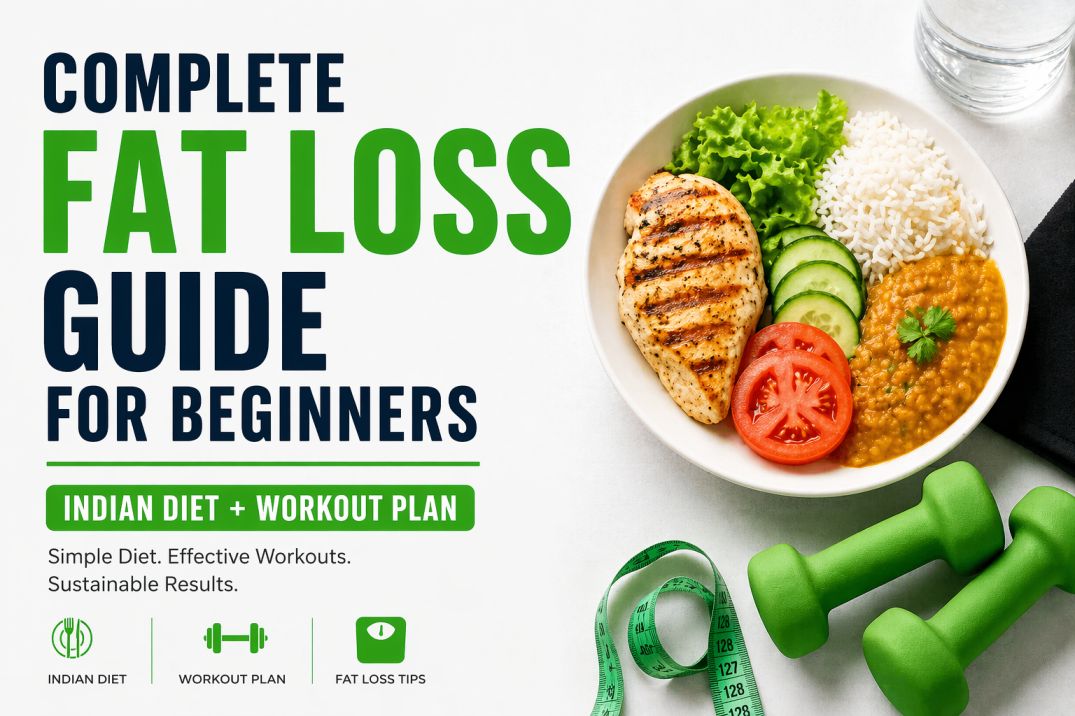
Your regular ghar ka khana can absolutely support fat loss. You just need to adjust portion sizes, protein intake, and meal structure.
Breakfast — Start Strong
Keep it light but protein-rich. Good options include oats with milk and a banana, two whole eggs with one roti, poha with peanuts (minimal oil), or vegetable upma. The goal is to start your day with steady energy, not a carb crash by 10 AM.
Lunch — Your Main Meal
This is where most people overeat. Keep it structured: 2 rotis or a controlled portion of rice, one serving of dal or chicken/paneer, a sabzi, and — very importantly — a salad. Eat the salad first. It fills your stomach with fiber and water, so you naturally eat less of the heavier stuff.
Evening — The Danger Zone
Cravings hit hardest between 4 PM and 7 PM. Instead of biscuits, namkeen, or chips, reach for roasted chana, a piece of fruit, black coffee, or a small spoon of peanut butter. These options satisfy hunger without wrecking your calorie budget.
Dinner — Keep It Light
Dinner should not feel like a second lunch. Good options: 2 rotis with sabzi and a protein source like paneer, egg bhurji with salad, or light khichdi. Simple rule — eat noticeably less at dinner than at lunch.
The One Thing Most Indian Diets Are Missing: Protein
This is the biggest gap in the average Indian diet. Without enough protein, you feel hungry again quickly, you lose muscle along with fat, and your fat loss slows down significantly. Try to include a protein source in every meal — eggs, paneer, chicken, dal, or Greek yogurt. Even small, consistent changes here make a major difference over weeks.
Do You Actually Need a Gym?
Short answer: no. Long answer: it depends on how fast you want results and what kind of body you want to build.
If You're a Beginner — Start at Home
You don't need machines. You need movement. A simple home routine of squats, push-ups, lunges, planks, and jumping jacks — done for 20 to 30 minutes — is more than enough to start. Don't aim for perfection. Aim for showing up consistently.
If You Go to the Gym
Focus on strength training, not just cardio. Building muscle makes your body burn more calories throughout the day, even at rest. A basic split covering chest, back, legs, and shoulders is plenty. Add some cardio on top, but don't rely on it alone.
Walking: The Most Underrated Tool
Cardio is misunderstood. People assume more cardio means faster fat loss. Not quite. The most sustainable and underrated form of daily movement is simply walking. Increasing your daily step count from 4,000 to 8,000 to 10,000 steps can meaningfully accelerate your fat loss without any extra gym time. Start where you are and build up gradually.
Building the Habit — The Real Game
Here's what separates people who succeed from people who don't: it's not the perfect diet plan. It's the ability to stay consistent on ordinary, unmotivated days.
To make consistency easier, follow what's called the 80/20 approach — aim for discipline 80% of the time and give yourself room to be human the other 20%. One bad meal doesn't undo a week of effort. One bad day doesn't mean you've failed. The only way you actually fail is by quitting.
To track your daily habits and stay accountable, check out DayZero.fit. It's designed for fitness challenges and habit tracking, and it's one of the better tools available if you want structure and accountability without overcomplicating things. You can set your own challenges, track streaks, and see real progress over time.
The Biggest Mistakes to Avoid
Doing too much too fast. Drastic changes lead to burnout, not results. Start small, build slowly, and add one habit at a time.
Starving yourself. Eating too little is not a shortcut — it causes weakness, intense cravings, and eventual binge eating. A small, sustainable deficit is always better than aggressive restriction.
Expecting fast results. You didn't gain fat in a week, and you won't lose it in one either. Healthy fat loss is 0.5 to 1 kg per week. Some weeks you'll lose more, some weeks nothing changes on the scale — and that's completely normal.
Ignoring sleep. This one is ignored constantly. Poor sleep raises cortisol (a stress hormone that promotes fat storage), increases hunger hormones, and reduces your motivation to exercise. Seven to eight hours of sleep isn't optional — it's part of your fat loss plan.
The Truth About Belly Fat
Everyone wants to know: how do I lose belly fat specifically?
The honest answer: you can't spot-reduce fat. Your body decides where to pull fat from first, and that's largely determined by genetics and hormones. For many people, the belly is one of the last places fat leaves. The good news is that if you stay consistent with your calorie deficit and training over time, belly fat will reduce — it's just not always the first to go.
Don't obsess over one body part. Focus on the overall process.
How Long Will It Actually Take?
Real, sustainable fat loss looks like this:
A healthy rate is 0.5 to 1 kg of fat lost per week. Over 30 days, that's 2 to 4 kg. Over 60 days, 4 to 8 kg. Some weeks you'll lose more, some weeks nothing moves — that's completely normal due to water retention and hormonal fluctuations. What matters is the trend over weeks, not the daily number on the scale.
If you stay consistent for 60 to 90 days, you won't just see physical change. You'll feel like a different person — more energy, better sleep, improved confidence, and a relationship with food that doesn't feel like a battle anymore.
Final Thoughts
You don't need motivation. Motivation is unreliable — it shows up some days and disappears on others. What you need is a simple system you can follow even on the days you don't feel like it.
Stop looking for the perfect diet, the perfect workout, or the perfect time to start. None of those exist. What exists is today, right now, and the small decision you make in this moment.
Start with a basic diet. Add simple workouts. Move more every day. Calculate your calorie needs at quadfit.info/tools so you know exactly what you're working with. Build your daily habits and track your challenges at DayZero.fit so you stay accountable.
Your transformation won't happen in one gym session or one clean meal. It happens in the small decisions you repeat — quietly, unglamorously — every single day.
Start today. Keep going tomorrow. That's the whole plan.
Disclaimer: This article is for informational purposes only and does not constitute medical advice. Consult a healthcare professional before starting any new diet or exercise program.