Is Soy Really Bad for Hormones? The Simple Truth Explained
If you spend time in the gym, scroll through fitness content, or watch health videos online, you have probably heard this warning:
"Avoid soy. It increases estrogen."
Some people even say soy lowers testosterone, causes man-boobs, or damages hormones. These claims sound serious. Hormones control muscle growth, fat storage, mood, and overall health. So naturally, people get worried.
But is soy actually harmful? Or has the internet turned a simple food into a big fear?
Let’s break this down in simple, clear language.
Why Are People Afraid of Soy?
The fear around soy mainly comes from one word: phytoestrogen.
Soy contains natural plant compounds called isoflavones. These are classified as phytoestrogens. Since the word “estrogen” is part of the name, many people assume soy acts like the estrogen hormone inside the human body.
But this is where confusion begins.
Phytoestrogens are not the same as human estrogen. They are plant-based compounds that only look slightly similar in structure. Their effect inside the body is much weaker.
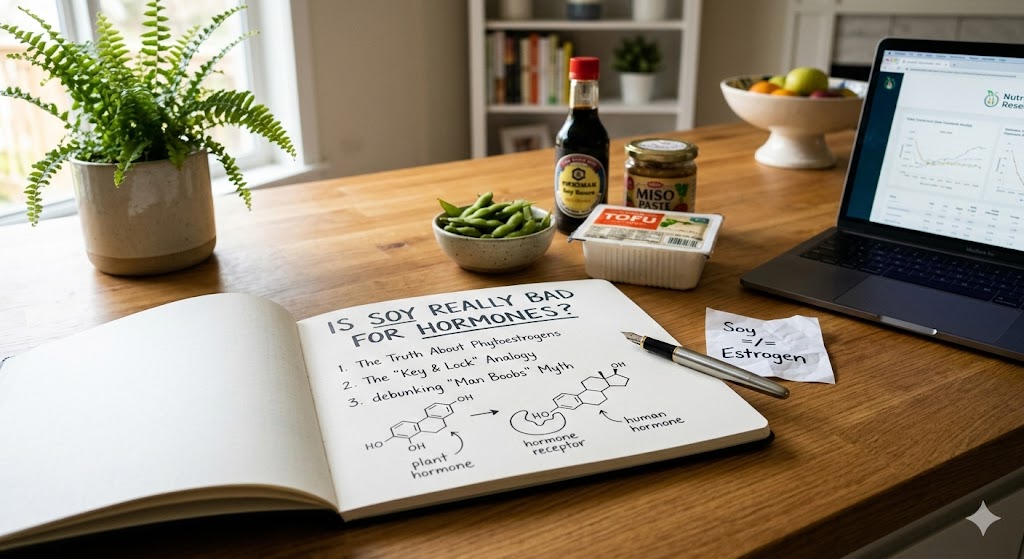
Think of it like this:
- Real estrogen is like a strong metal key that fits perfectly into a lock.
- Phytoestrogen from soy is like a soft plastic key that barely turns the lock.
Sometimes it may create a very mild effect. Sometimes it may even block stronger estrogen from attaching. But it does not flood the body with powerful hormones.
That is a common misunderstanding.
Does Soy Lower Testosterone in Men?
This is the biggest concern, especially among men who lift weights or care about muscle building.
Many worry that soy will:
- Lower testosterone
- Increase estrogen
- Cause gynecomastia (enlarged male breast tissue)
- Reduce libido
However, when researchers studied this properly in humans, the results were very clear. A 2021 meta-analysis of 41 clinical trials found neither soy nor isoflavone intake affects testosterone or estrogen levels in men (Reed et al., Reproductive Toxicology, 2021).
Large scientific reviews that analyzed dozens of clinical trials found no significant effect of soy protein or isoflavones on:
- Testosterone levels
- Estrogen levels in men
- Sperm quality
- Sex drive
Even men consuming moderate to high amounts of soy did not experience hormone imbalance.
The idea that soy causes "man-boobs" mostly comes from rare extreme cases, such as individuals consuming very high amounts daily. Drinking liters of soy milk every single day is not normal eating behavior.
In reality, gynecomastia is more commonly linked to higher body fat levels. When body fat increases, an enzyme called aromatase converts some testosterone into estrogen. That is related to calorie surplus and obesity — not tofu in your lunch.
What About Women and Soy?
For women, the concern usually revolves around breast cancer and menopause.
Soy and Breast Cancer
In the past, some experts worried that soy might increase breast cancer risk because of its estrogen-like compounds.
However, modern large-scale human studies show something different.
Women who consume moderate amounts of soy often have:
- Lower risk of breast cancer recurrence
- Better survival outcomes
A 2019 systematic review of 12 studies covering over 37,000 women found pre-diagnosis soy intake was associated with better overall survival, and both pre- and post-diagnosis soy intake were linked to reduced recurrence risk (Chi et al., European Journal of Nutrition, 2019).
This has been observed in populations where soy has been eaten traditionally for generations.
This does not mean soy cures cancer. But it clearly does not act as a hormone bomb as once feared.
Soy and Menopause
During menopause, estrogen levels naturally drop. This causes symptoms such as:
- Hot flashes
- Night sweats
- Mood changes
Because soy has very mild estrogen-like effects, it may help reduce the intensity of hot flashes for some women. A landmark meta-analysis of 19 randomized controlled trials found soy isoflavones reduced hot flash frequency by about 21% and severity by about 26% compared to placebo (Taku et al., Menopause, 2012). It is not a magic solution, but it can offer gentle support.
Is All Soy the Same?
This is important. Not all soy foods are equal.
Whole and Traditional Soy Foods
- Tofu
- Tempeh
- Miso
- Edamame
These are closer to their natural form. Some are fermented, which may benefit gut health. They provide protein, fiber, minerals, and beneficial plant compounds.
When eaten in moderation, these foods can be part of a healthy diet.
Highly Processed Soy Products
- Soy protein isolate powders
- Ultra-processed vegan nuggets
- Highly processed protein bars
- Artificial plant-based meat products
These products go through heavy processing. While they are not necessarily harmful, they lack the full nutritional profile of whole soy foods.
The issue here is not soy itself. It is the processing, additives, and overall diet quality.
The Bigger Picture: Hormones Are Complex
Hormones are controlled by many factors, including:
- Sleep quality
- Stress levels
- Body fat percentage
- Total calorie intake
- Physical activity
- Overall diet pattern
No single food has the power to destroy your hormonal system.
If someone eats a balanced diet, exercises regularly, sleeps well, and maintains a healthy weight, moderate soy consumption is unlikely to cause problems.
The real danger in nutrition is extreme thinking. Declaring one food as completely bad without looking at full scientific evidence creates unnecessary fear.
So, Should You Eat Soy?
For most healthy individuals, soy can be a safe and nutritious option.
It provides:
- High-quality plant protein
- Heart-friendly fats
- Important minerals
- Dietary fiber (in whole forms)
You do not need to eat soy every day. You also do not need to avoid it completely.
Moderation is key.
Final Thoughts
Soy is simply a legume that humans have eaten for thousands of years. It is not a secret hormone disruptor. It is not testosterone poison. It is not automatically harmful.
Most fears come from misunderstanding the word phytoestrogen and spreading incomplete information online.
If you enjoy tofu, tempeh, or soy milk in reasonable amounts, there is no strong scientific reason to panic.
Your hormones are influenced far more by your overall lifestyle than by one ingredient on your plate.
Instead of fearing a single food, focus on balance, consistency, and healthy habits. That approach will do far more for your body than avoiding soy ever will.