How to Build Your Vastus Lateralis: Best Exercises for Wider, Stronger Outer Quads (2026 Guide)
Most people training legs have no idea why their quads don't look developed — even after months of squatting.
The answer, usually, is the vastus lateralis. The outer quad. The muscle that gives legs that wide, sweeping look from the front. The one that makes the difference between legs that look trained and legs that look... fine.
It doesn't respond well to generic leg training. You have to actually target it. And most standard leg day programming doesn't do that effectively.
Let me explain why — and what to do about it.
What Is the Vastus Lateralis
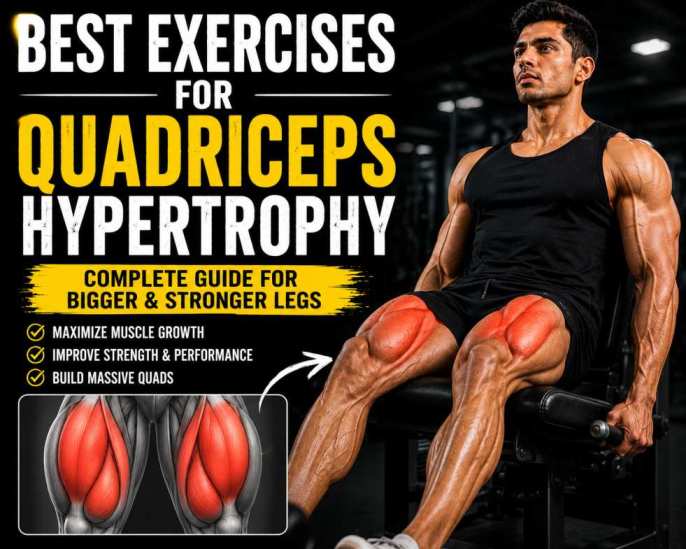
The quadriceps is four muscles. Most people roughly know this. But the individual functions and positions get blurred in most fitness content.
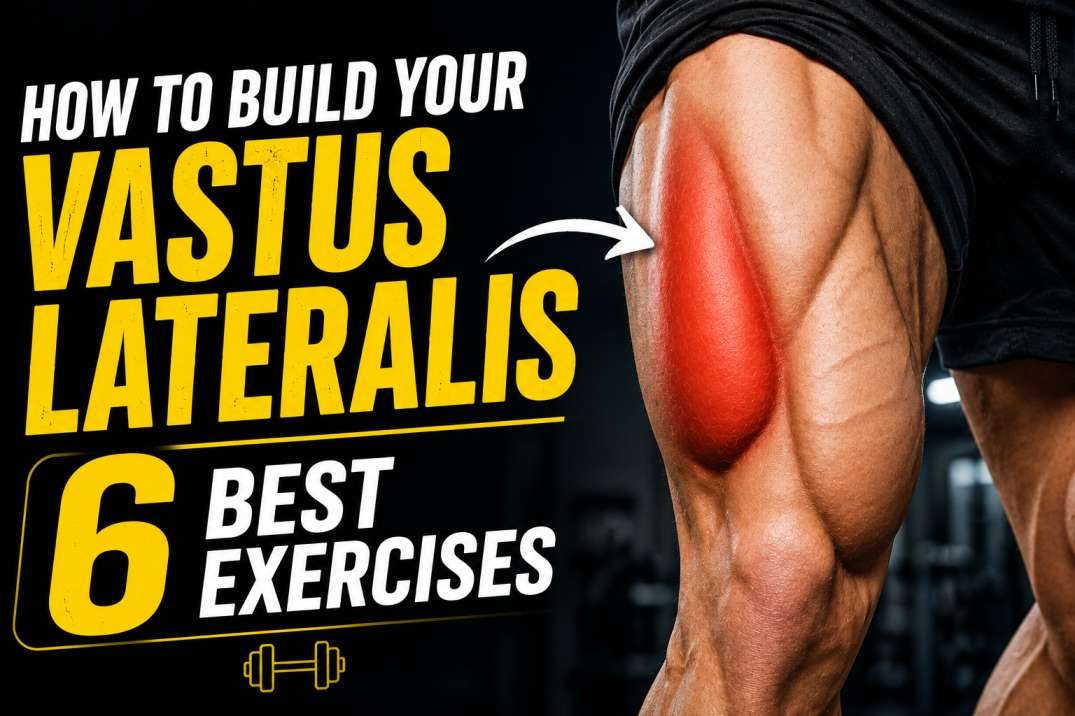
The vastus lateralis is the largest of the four. It runs down the outside of the thigh — from the top of the femur all the way to the kneecap. From the front, a well-developed vastus lateralis is what creates that outward flare on the outer thigh. From the side, it's what gives the legs actual thickness.
It's primarily responsible for knee extension — straightening the leg. But the angle of the muscle fibres and where it attaches means not all knee extension exercises load it equally. Foot position, stance width, and how far forward the knee travels all change how much demand shifts to the outer versus inner quad.
That specificity is why generic squatting alone often doesn't fully develop it.
Why Most Leg Training Under-Develops the Outer Quad
Standard barbell squats with a shoulder-width or wider stance load the glutes, hamstrings, and inner quads heavily. The vastus lateralis gets some work. Not enough for most people to develop it to its potential.
Leg press with feet high and wide — same issue. Hip-dominant, glute-dominant. The outer quad is assisting, not driving.
The exercises that target the vastus lateralis most effectively tend to have a few things in common: narrower stance, knee tracking forward over the toes, deep knee flexion under load, and often a more upright torso. Those mechanics increase the demand specifically on the outer quad.
Once you understand that, exercise selection becomes obvious.
6 Best Exercises for Vastus Lateralis
1. Narrow Stance Squat
Take your regular squat stance and bring it in. Feet closer together, toes pointing mostly forward. This simple change shifts the mechanics dramatically — less hip involvement, more knee-dominant movement, outer quad takes on significantly more load.
The narrower the stance, the more the knee has to travel forward over the toe to maintain balance. That forward knee travel is exactly the position that loads the vastus lateralis hardest.
Go deep. Partial reps here are genuinely a waste of time — the outer quad is under greatest tension at the bottom of the movement.
How to program it: 4 sets of 8–10 reps. Control the descent. Three seconds down, drive up.
2. Leg Press with Low, Narrow Foot Placement
The leg press is one of the most versatile machines in any gym, and most people use only one foot position their whole life.
Drop your feet low on the platform. Bring them closer together — roughly hip-width or narrower. From this position, the push is almost entirely through the quads, and the outer quad specifically takes on more of the work because the narrower stance mimics the narrow squat mechanics.
Go as deep as your hip mobility allows. The bigger the range of motion, the greater the stimulus.
How to program it: 3–4 sets of 10–15 reps. Use after squats as a volume builder.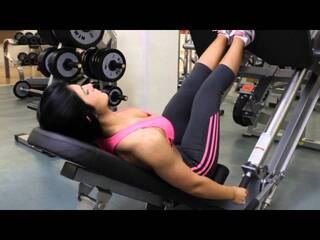
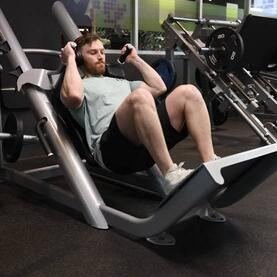
3. Hack Squat Machine
If your gym has one, it should be in your programme. Full stop.
The hack squat forces your torso upright — the pad behind you takes away the option of leaning forward — which means your knees have to travel forward to complete the movement. That forward knee position under load is the primary driver of vastus lateralis activation.
Feet slightly narrower than shoulder-width, toes roughly forward. Deep range. It will feel intense on the outer quad at the bottom of the movement. That's correct. That's where the growth stimulus is.
How to program it: 3 sets of 8–12 reps. Works well as second or third exercise.
4. Bulgarian Split Squat
Nobody enjoys these. They're awkward to set up, uncomfortable to perform, and the front quad screams by rep six.
They're also probably the best single-leg vastus lateralis exercise available.
Rear foot elevated on a bench, front foot positioned so the shin travels forward as you lower. The stretch on the outer quad at the bottom of a properly performed Bulgarian split squat is significant — and deep stretch under load is one of the strongest signals for muscle hypertrophy we know of.
Because it's unilateral, each leg works independently. No stronger side compensating for the weaker. Over time this builds more balanced outer quad development than bilateral work alone.
Keep the front foot closer to the bench than you might think — this increases knee travel and quad demand. Farther away shifts it toward the glutes and hip flexors.
How to program it: 3 sets of 8–10 reps each leg. Bodyweight or light dumbbells to start — the position itself provides most of the stimulus.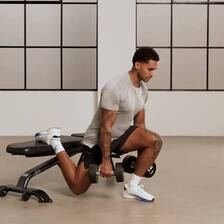
5. Sissy Squat
This one looks strange. People walking past in the gym will give you a look.
It is also one of the most direct vastus lateralis exercises that exists.
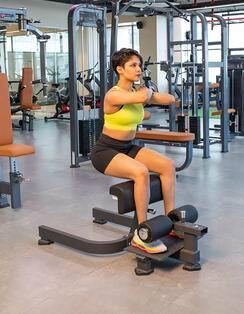
You lean back, rise onto your toes, and lower your body by bending the knees while keeping the hips extended. The entire movement is knee flexion with the hip in extension — which massively loads the rectus femoris and vastus lateralis while essentially removing the glutes and hamstrings from the equation.
Start with bodyweight. The balance and the quad stretch at the bottom take getting used to. A sissy squat pad or holding a cable for counterbalance makes it more accessible.
Not suitable for anyone with significant knee issues. For healthy knees — genuinely excellent for outer quad isolation.
How to program it: 3 sets of 10–12 reps. Bodyweight first, add load once the movement feels controlled.
6. Leg Extension — Toes Turned In
Standard leg extensions load the quads broadly. A small tweak shifts more emphasis to the vastus lateralis specifically.
Point your toes slightly inward — maybe 10–15 degrees — during the movement. This internal tibial rotation changes the pull angle at the kneecap and increases vastus lateralis involvement relative to the medialis.
It's a subtle change. The difference in sensation is noticeable. The outer quad gets a more direct hit.
Controlled movement here — no swinging the weight up. Full extension at the top, slow return. The muscle is under tension for longer that way.
How to program it: 3 sets of 12–15 reps. Use as a finisher when the quads are already fatigued from compound work.
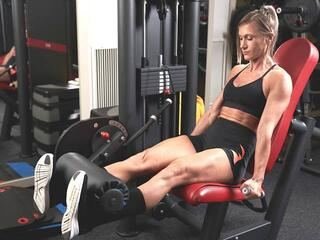
A Workout That Actually Targets the Outer Quad
Here's how to put this together into a session that specifically drives vastus lateralis development:
| Exercise | Sets | Reps | Rest |
|---|---|---|---|
| Narrow Stance Squat | 4 | 8–10 | 2–3 min |
| Hack Squat / Leg Press (narrow, low) | 3 | 10–12 | 90 sec |
| Bulgarian Split Squat | 3 each leg | 8–10 | 90 sec |
| Sissy Squat | 3 | 10–12 | 60 sec |
| Leg Extension (toes in) | 3 | 12–15 | 60 sec |
Total: 16–18 working sets per session. Run this once or twice per week. If twice, separate by at least three days.
Mistakes That Kill Outer Quad Development
Too wide a stance on everything. Wide squats, sumo leg press, wide hack squat — all these shift load toward the hips and inner thighs. Not wrong exercises. Just not targeting what you're trying to build.
Partial range of motion. The vastus lateralis is under greatest tension in the deep, stretched position. Stopping at 90 degrees or higher on squats and leg press removes most of the growth stimulus for the outer quad specifically.
Only training quads once a week. Muscle hypertrophy research is fairly consistent on frequency — twice per week produces better results than once per week for most trained individuals. Split your volume across two sessions.
Skipping the isolation work. Compound movements are the foundation. But the leg extension with toes turned in, done after compound work when the muscle is already fatigued, adds direct stimulus that compound movements can't fully replicate. Don't skip it to save time.
Not enough progressive overload over time. Same weight, same reps, every session for months. The muscle adapts. Adaptation means it has no reason to grow further. Slow, consistent progression — more reps, more weight, better technique — is non-negotiable for ongoing development.
A Few Practical Notes
Knee over toe is fine. Actually necessary for proper vastus lateralis loading. The old advice about keeping knees behind toes is outdated and based on a misunderstood paper from decades ago. Every exercise on this list involves significant forward knee travel. That's the point.
Soreness isn't the goal. Outer quad DOMS after a new training programme is normal. But chasing soreness as a metric of a good session is counterproductive. Progressive overload and consistent training are what build the muscle, not how destroyed you feel the next day.
It takes time. The vastus lateralis is a large muscle that responds to training, but visible outer quad development — that sweep from the front — takes months of consistent, targeted work. Not weeks. Manage expectations and stay consistent.
Nutrition matters here too. Training a muscle in a severe calorie deficit limits hypertrophy. You don't need to eat excessively, but building the outer quad specifically requires adequate protein — 1.2 to 1.6 grams per kg of bodyweight daily — and enough total calories to support muscle synthesis.