Suicide Grip vs Regular Grip: Which One Should You Actually Use in the Gym?
Walk into any gym and bring up suicide grip in a conversation. Someone will immediately say it's dangerous. Someone else will say they've used it for years with no issues. A third person will look confused and ask what you're talking about.
That's kind of where the debate lives — strong opinions, not much actual explanation.
So let's just go through it properly.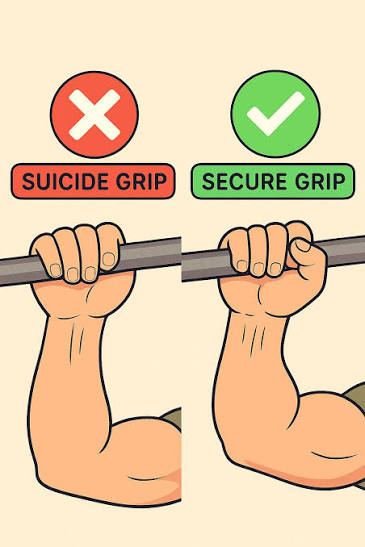
What Is Suicide Grip
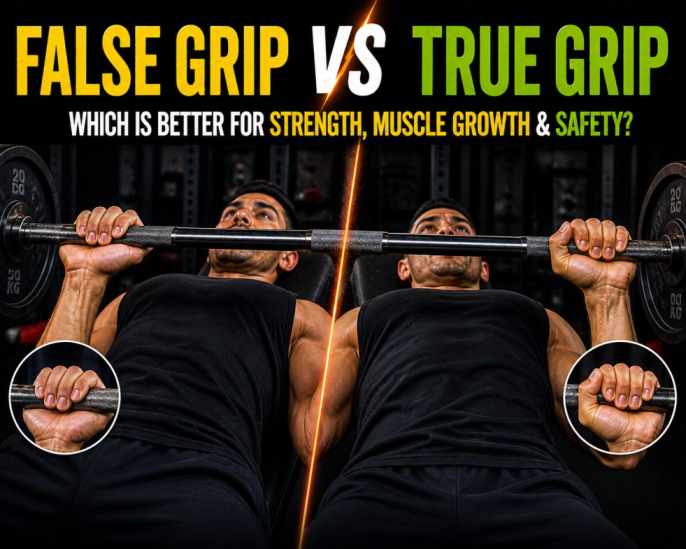
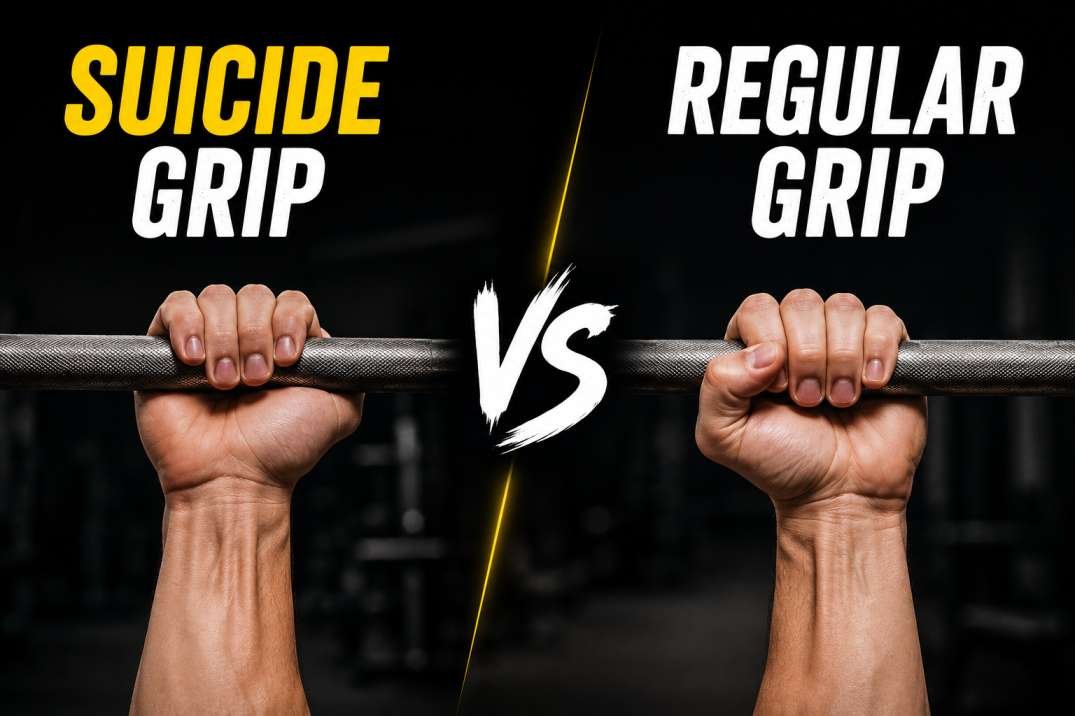
Suicide grip — also called thumbless grip or false grip — is when you wrap your fingers around the bar without hooking your thumb underneath. Thumb stays on the same side as your fingers, or just rests alongside the bar.
Regular grip — pronated grip with thumb wrapped under and around the bar — is what most people learn first and use by default.
The difference sounds small. The effect on feel, bar position, and muscle activation is more significant than most people expect.
Why Does the Name Sound So Dramatic
Fair question.
The name comes from the most obvious risk: without the thumb locked around the bar, there's nothing stopping the bar from rolling out of your hand if your grip gives way. On a bench press with heavy weight, that means the bar could slide toward your face or throat.
So yes — the risk is real in specific situations. But the name exaggerates it for most use cases. A suicide grip on a cable pushdown carries essentially zero danger. Context matters enormously here and most discussions skip that part entirely.
Where Each Grip Is Actually Used
Before comparing them, worth establishing where each one shows up in real training:
Bench press — the most debated context. Both grips are used here.
Overhead press — suicide grip is genuinely common among experienced pressers.
Pushdowns and tricep cable work — thumbless grip used frequently.
Pull-ups and rows — regular grip almost universally.
Front squats — some lifters use a thumbless grip on the bar here for wrist comfort.
The grip question isn't one-size-fits-all. What makes sense on a cable pushdown is different from what makes sense under a loaded barbell.
Suicide Grip — The Case For It
People who use thumbless grip aren't being reckless. There are genuine reasons experienced lifters prefer it for certain movements.
Wrist alignment on pressing movements. With a regular grip, the thumb wrapping underneath can pull the wrist into slight extension — bending it back. For people with wrist discomfort during bench press or overhead press, this is a real issue. Thumbless grip often allows the wrist to sit straighter, with the bar tracking more directly over the forearm. Less wrist pain. More comfortable pressing.
Bar position on the palm. Thumbless grip tends to keep the bar lower on the palm — closer to the heel of the hand — naturally. This is actually the mechanically stronger position for pressing. Some lifters struggle to achieve this with a full grip and switch to thumbless to make it easier.
Tricep and chest feel on bench. A number of lifters report better muscle connection — particularly chest and tricep activation — with suicide grip. This isn't well-studied but is consistently reported. Whether it's the wrist position, elbow angle, or something else isn't entirely clear.
Comfort on overhead press. Wrists under a barbell overhead press cop a lot of strain. Many lifters find thumbless grip significantly more comfortable here with no meaningful safety downside since the bar is in front of the shoulders, not above the face.
Regular Grip — Why It's the Default for Good Reason
Security. Thumb wrapped around the bar means the bar physically cannot roll out of your grip without your entire hand losing contact. On heavy bench press, this matters. A lot. The thumb is what separates "the bar slipped" from "the bar is now on my sternum."
Stronger total grip force. Thumb involvement increases overall grip strength. For pulling movements — rows, pull-ups, deadlifts — thumbless grip makes no sense. You'd be intentionally limiting your grip without any mechanical benefit.
Better for beginners. If you're learning to bench press, learning to overhead press, learning to squat — full grip is the right starting point. Develop the baseline mechanics, wrist strength, and body awareness first. The thumbless variation is a refinement, not a starting point.
Lower risk of catastrophic error. An experienced lifter using suicide grip on bench press knows exactly what they're doing, has their spotter in position, and has the strength and control to manage it. A beginner in the same situation is one moment of distraction away from a serious accident.
The Honest Safety Assessment
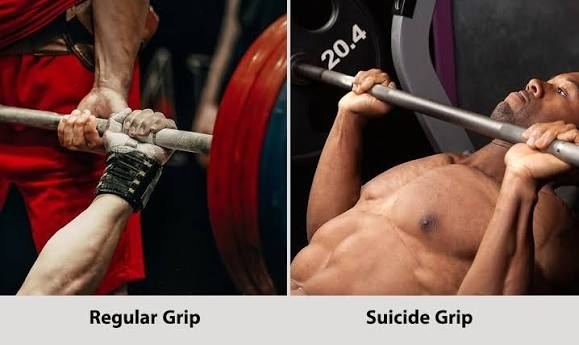
Suicide grip on bench press is where the actual danger lives. The bar can roll. If you're pressing alone, no spotter, heavy weight — and the bar rolls — the outcome can be severe.
That said: plenty of experienced, strong lifters bench with thumbless grip for years without incident. The risk is manageable with the right precautions:
Always use a spotter or safety bars when bench pressing thumbless. Don't go thumbless on true max effort sets. Keep the bar low on the palm, wrist straight. Maintain full concentration — no chatting mid-set, no distractions.
For overhead press, cable work, and tricep pushdowns? The danger argument largely disappears. The bar or cable handle isn't going to fall on you from those positions.
Which Should You Actually Use
Here's a practical breakdown:
Bench press — beginners: Full grip. No debate. Learn the movement properly first.
Bench press — intermediate/advanced with wrist pain: Thumbless grip is worth trying if wrist discomfort is limiting your training. Use a spotter or safety bars. Be deliberate about bar position on the palm.
Overhead press: Either works. If your wrists ache with full grip, thumbless is a reasonable switch.
Tricep pushdowns, cable work, isolation movements: Thumbless is fine. No meaningful safety concern here.
Pulling movements — rows, pull-ups, deadlifts: Full grip. Always.
Front squat: Some lifters find thumbless more comfortable for wrist positioning. Fine to try once you're comfortable with the movement pattern itself.
Common Mistakes With Both Grips
Letting the bar sit high in the palm with full grip. This forces wrist extension and causes the exact discomfort people blame on the grip itself. The fix is bar placement — lower in the palm — not necessarily switching grips.
Trying suicide grip under heavy load without preparation. Not a variation to start with on your working sets. Try it on warm-up weights, get familiar with the feel, then decide.
Ignoring wrist pain and just pushing through. Whether you're using full grip or thumbless, persistent wrist pain during pressing means something is off — bar position, wrist angle, or load. Address it rather than train through it indefinitely.
Final Verdict
Neither grip is universally better. That's the honest answer.
Regular grip is safer for beginners, better for heavy bench press without a spotter, and non-negotiable for pulling movements. Suicide grip offers genuine benefits for wrist comfort and bar position on pressing movements — but requires more experience, more caution, and the right context.
If your wrists hurt on bench press or overhead press and you've never tried thumbless grip — it's worth experimenting. If you're newer to lifting, get comfortable with full grip mechanics first. Add the variation once you actually know what you're changing and why.
The gym has enough actual risks without adding unnecessary ones. But dismissing suicide grip as purely dangerous misses the real picture too.
Use the right grip for the right movement. That's it.
If you have persistent wrist or shoulder pain during pressing movements, speak to a physiotherapist before making grip changes.