Walk into any gym on a busy evening and spend five minutes watching people at the bench press. You'll notice something pretty quickly — not everyone holds the bar the same way. Some lifters wrap their thumbs fully around the bar, knuckles white, grip locked in tight. Others let their thumbs sit on the same side as their fingers, bar resting across an open palm. Same exercise, same bar, completely different hand position.
Most people never think twice about how they're holding the bar. They grab it the way someone showed them, or the way that felt natural the first time, and just go from there. But grip actually matters more than most recreational lifters realise — not just for performance, but for safety, muscle activation, wrist comfort, and long-term joint health. Getting it wrong, especially on heavy pressing movements, has consequences.
So let's break this down properly. What's the difference between a false grip and a true grip, why do both exist, which one is actually safer, and what should you personally be using based on where you are in your training?
 What Is a True Grip?
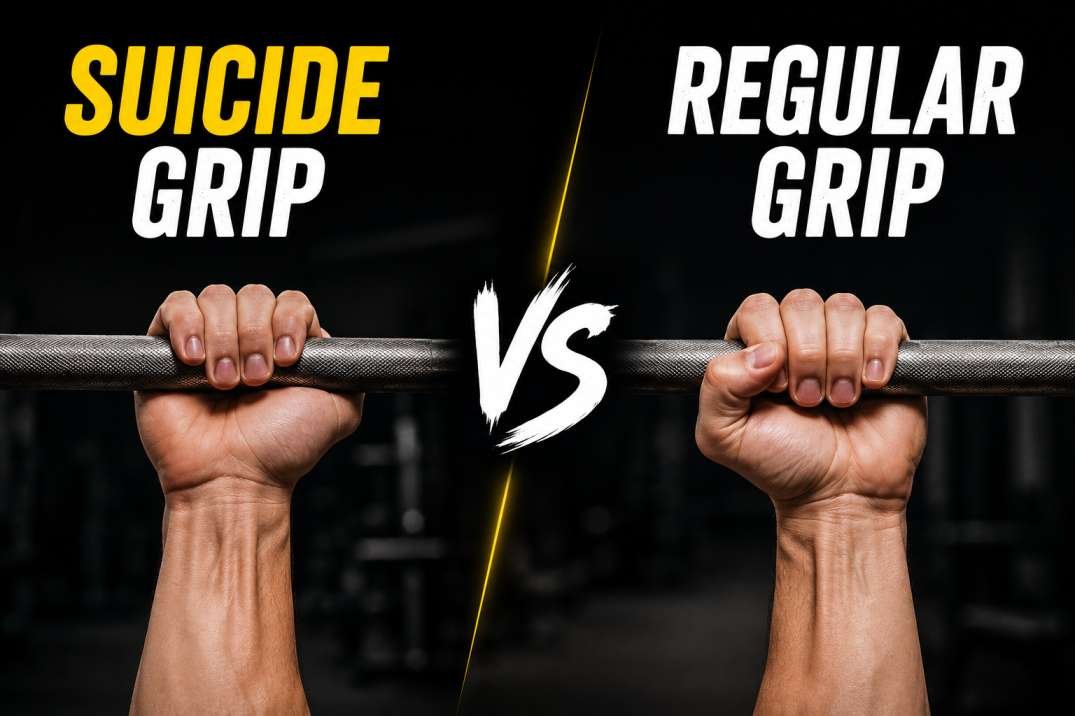
A true grip is exactly what most people picture when they think about holding a barbell or dumbbell correctly. Your thumb wraps fully around the bar, meeting your fingers on the other side, creating a closed loop around the implement. It's the standard grip taught in virtually every beginner program, recommended by most coaches, and used by the majority of lifters across most exercises.
The closed thumb position is the key feature here. Because your thumb is actively wrapped around the bar, the weight is secured within your hand rather than just resting on top of it. This means the bar essentially cannot roll away from you without your hand going with it. On bench press, overhead press, rows, and most pulling movements, this creates a stable and predictable connection between your hand and the bar.
True grip tends to feel slightly less natural for some people at first — particularly on pressing movements where the wrist needs to stay neutral. If your wrists are inflexible or your grip width isn't set correctly, a fully closed true grip can put some stress through the wrist joint. But these are form and mobility issues, not inherent problems with the grip itself.
For beginners, true grip is essentially non-negotiable. When you're still learning movement patterns, building strength, and figuring out how your body moves under load — having the bar secured in your hand removes one major variable from the equation. It's the safer, more forgiving starting point.
What Is a False Grip? And Why Is It Called the Suicide Grip?
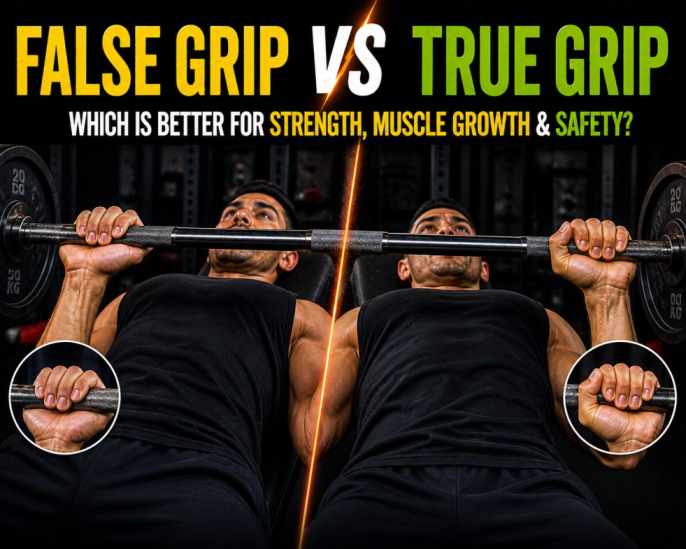
 A false grip — also called a thumbless grip, and somewhat dramatically nicknamed the suicide grip — is when the thumb stays on the same side as the fingers rather than wrapping around the bar. Instead of a closed loop, you have an open hand with the bar resting across the palm and base of the fingers, held in place primarily by pressure rather than mechanical grip.
The suicide grip nickname isn't just gym bro dramatics. It comes from a very real risk associated with this hand position on certain exercises, particularly the barbell bench press. Because the thumb isn't locked around the bar, the bar is technically free to roll. If your hand position shifts slightly, if fatigue causes your grip to loosen, or if the bar drifts out of the grove on a heavy set — there's nothing mechanically stopping the bar from sliding off your palm toward your face, neck, or chest.
Bench press accidents involving bar drops are far more likely with a false grip than a true grip. Serious injuries and fatalities have occurred this way, which is why the nickname exists and why coaches are generally firm about discouraging it for pressing movements, especially among newer lifters.
That said — and this is important — the false grip is not simply a mistake that ignorant lifters make. Many experienced athletes use it intentionally for specific reasons, and for certain exercises it's actually the preferred option. Understanding when and why changes the conversation significantly.
The Key Differences Between False Grip and True Grip
The most obvious difference is safety, and that comes down to mechanical security. With a true grip, the bar is enclosed within your hand and cannot move independently of it. With a false grip, the bar sits on top of an open palm and is free to shift if conditions change. On a horizontal pressing movement with significant weight overhead, that distinction is not trivial.
Control is the second major difference. True grip gives you more direct control over bar path, particularly during pressing movements. Because your thumb is engaged around the bar, your hand has a more active role in guiding the movement. False grip effectively makes your hand more passive — the bar sits in it rather than being held by it. For some lifters this actually feels more comfortable, but it does reduce the degree to which you can actively steer the bar.
Muscle activation is where things get more nuanced. Some lifters report that using a false grip on pressing movements, particularly the bench press, allows them to feel the chest more directly rather than the triceps taking over. The slightly different forearm and wrist angle that comes with a thumbless grip can shift how load is distributed through the pressing chain. This is subjective and varies between individuals, but it's a legitimate reason experienced lifters sometimes experiment with grip position.
Wrist positioning is another meaningful difference. For people with limited wrist mobility or chronic wrist discomfort, a false grip on pressing movements can sometimes feel more natural because the wrist doesn't have to fight the thumb position to stay neutral. The trade-off is obvious — comfort at the cost of security.
The Real Benefits of True Grip
The primary benefit of true grip is safety, full stop. There is no grip position that offers more mechanical security on pressing movements. The bar is enclosed in your hand and the only way it leaves that position is if you let it. For any exercise where the bar is above your body — bench press, overhead press, incline press — this matters enormously.
Beyond safety, true grip tends to offer better overall control and more consistent bar path. Experienced lifters who train with true grip typically develop a stronger, more durable grip over time because the thumb is actively contributing to every rep rather than sitting idle. This has carryover to other exercises and to overall grip strength development.
True grip is also more transferable. The standard coaching on grip across almost every pressing, pulling, and hinging movement defaults to a closed thumb position. Learning to train comfortably and effectively with true grip means you're building habits that apply everywhere, rather than developing a thumbless preference that creates problems when you eventually need to switch.
The Real Benefits of False Grip
False grip isn't popular among experienced lifters for no reason. There are genuine benefits, and being honest about them matters.
On pulling movements like lat pulldowns, cable rows, and certain machine exercises, a false grip can reduce forearm and bicep involvement, allowing the target muscle to work harder without the grip becoming a limiting factor. This is why some bodybuilders use a thumbless position on back exercises — they're trying to keep tension in the lats rather than letting the arms dominate.
On ring muscle-ups and gymnastics-based movements, a true false grip (slightly different from the bench press version — the wrist actually comes over the ring) is often essential for the transition from pull to push at the top of the movement. In this specific context, it's a technical requirement, not a shortcut.
Wrist comfort during pressing movements is a legitimate reason some experienced lifters experiment with false grip. If the wrists are chronically uncomfortable under a closed thumb position and mobility work hasn't resolved it, some coaches will allow a thumbless grip under controlled conditions with a spotter present — but this is the exception, not the rule.
The Risks — And Why This Section Matters
The risk of a false grip on horizontal and overhead pressing movements is simple: bar drop. When the bar is above your torso and nothing mechanical is keeping it in your hand, any lapse in attention, fatigue, or bar drift can result in the bar falling. On bench press this means a loaded barbell potentially landing on your chest, sternum, throat, or face. At working weights this is not a minor incident.
The risk is compounded by the fact that it tends to happen at the worst moments — toward the end of a heavy set when fatigue is highest, during a max effort attempt when focus is most tunnel-visioned, or when training alone without a spotter. These are exactly the conditions under which a false grip becomes dangerous.
Beyond bar drop risk, false grip on pressing movements can over time contribute to wrist instability and discomfort, particularly if the bar isn't sitting well on the palm. And because the thumb is disengaged, grip strength development for that movement is compromised compared to a fully closed position.
Which Grip Should You Use?
If you're a beginner — true grip, always, without exception on pressing movements. You're still developing your movement patterns, your bar path isn't yet grooved, and you need the mechanical security that a closed thumb position provides. No amount of chest activation benefit from a thumbless grip is worth the risk when you're still learning to bench press.
If you're an intermediate or advanced lifter, the answer depends on the exercise. For barbell bench press, overhead press, and any movement where a loaded bar is above your body — true grip remains the strongly recommended choice unless you're working with an experienced spotter who understands the risk, have specific mobility-based reasons for the adjustment, and are not training at high intensity or to failure.
For pulling movements, machine exercises, and cable work — experimenting with a false grip to feel the target muscle more directly is low risk and potentially useful. The bar or handle dropping in a lat pulldown is not a safety event in the way a bar drop on bench press is.
For gymnastics and ring work — follow the specific technical guidance for the movement. False grip on rings for muscle-ups is a legitimate technique, not a safety compromise.
Common Mistakes Around Grip
The most common mistake is simply not thinking about grip at all. Most people grab the bar wherever feels natural and never revisit it. If your wrists are bent back during pressing, if the bar is sitting in your fingers rather than your palm, or if your grip width doesn't match your shoulder width — these are technical errors that compound over time and contribute to wrist, elbow, and shoulder problems.
Another common mistake is using a false grip because it "feels more comfortable" without understanding why it feels that way. Often the real issue is wrist mobility, grip width, or bar position — problems that can actually be fixed rather than worked around with a thumbless grip.
A third mistake is gripping too loosely with a true grip, essentially creating a semi-false grip without the intention. Your true grip should be firm and active, with the thumb genuinely pressing into the bar and contributing to the hold.
Final Verdict
True grip is safer, more transferable, and the right choice for the overwhelming majority of lifters on the overwhelming majority of exercises. If you bench press, overhead press, or do any loaded movement with a bar above your body — wrap your thumbs around the bar. Every time. This isn't a preference, it's a safety baseline.
False grip has its place — on pulling movements for muscle activation, in gymnastics contexts where it's technically required, and occasionally in highly supervised pressing contexts for experienced lifters with specific reasons. It is not a casual preference or a comfortable alternative to learning proper grip mechanics.
If you've been using a false grip on bench press because it felt natural or because you saw someone else doing it — now's a good time to make the switch. The bar path will feel slightly different at first, the wrist position might need adjustment, and your grip width might need to shift. Give it a few sessions. The mechanical security and long-term safety are worth the brief adjustment period.
Grip is one of those details that gets overlooked until something goes wrong. Don't wait for something to go wrong.