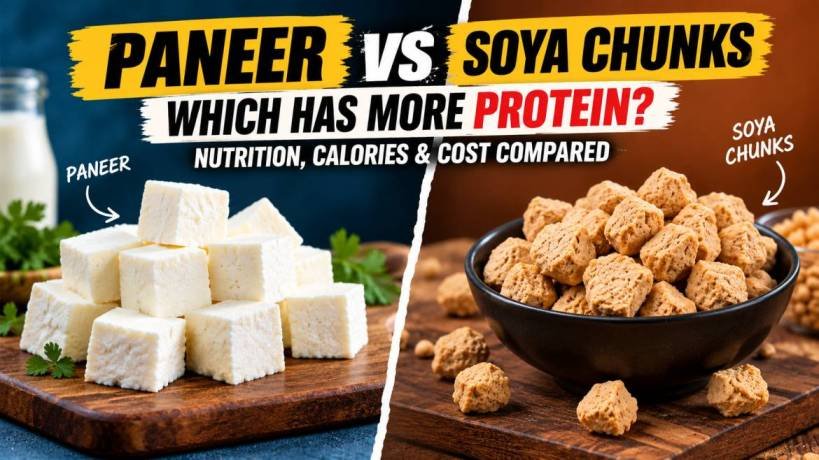
This is probably the most common vegetarian protein debate in Indian fitness circles. And unlike a lot of gym debates, this one actually has a clear answer — depending on what you’re optimising for.
Both are genuinely good protein sources. Both are widely available in India. Both work in Indian cooking without requiring any major dietary overhaul. But they’re quite different nutritionally, and the right choice depends on your goal, your budget, and honestly, how much you care about the taste difference.
Let’s compare them properly.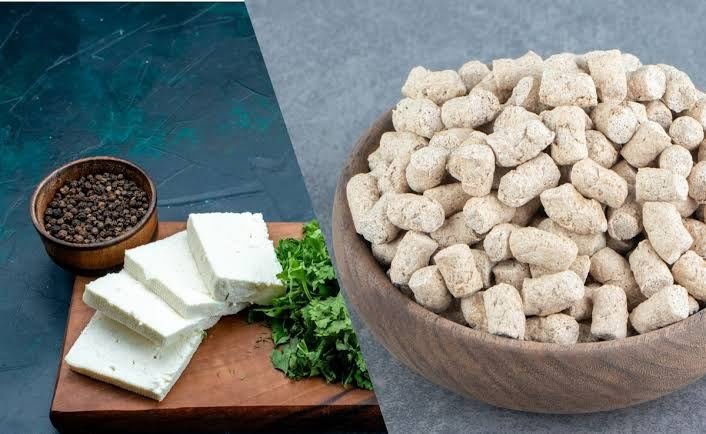
Protein Content — The Main Question
This is what most people actually want to know. So straight to it.
Soya chunks (dry, uncooked): ~52g protein per 100g
Paneer (full fat): ~18–20g protein per 100g
Soya chunks win this comparison significantly — and it’s not particularly close. Per 100 grams of the dry product, soya chunks contain roughly two and a half times the protein of paneer.
But there’s an important context here. Soya chunks are measured dry. When you cook them — soaking and boiling in water — they absorb water and expand to roughly three times their dry weight. So 100g dry soya chunks becomes approximately 300g cooked. The protein per 100g cooked soya chunks drops to around 16–18g — roughly comparable to paneer by weight.
What changes the equation is calories. More on that below.
Full Nutrition Comparison
| Nutrient | Paneer (per 100g) | Soya Chunks Dry (per 100g) | Soya Chunks Cooked (per 100g) |
|---|---|---|---|
| Protein | 18–20g | 52g | 16–18g |
| Calories | 265–300 kcal | 345 kcal | 115–120 kcal |
| Fat | 20–22g | 0.5g | 0.2g |
| Carbohydrates | 1.5–2g | 33g | 11g |
| Fibre | 0g | 13g | 4g |
| Calcium | High | Moderate | Moderate |
| Iron | Low | High | Moderate |
Calories — Where Soya Chunks Pull Ahead
This is the bigger difference for most fitness goals.
100g of paneer has roughly 265–300 calories, almost entirely from fat and protein. It’s calorie-dense — which isn’t inherently bad, but it means you have to be conscious of portion size if calories matter to you.
100g of cooked soya chunks has roughly 115–120 calories for a similar amount of protein. That’s a significantly better protein-to-calorie ratio — you’re getting roughly the same protein at less than half the calories.
For fat loss specifically — where total calorie intake has to be managed — this matters a lot. Soya chunks let you hit your protein targets without using up a large portion of your daily calorie budget. Paneer is harder to eat in large quantities without the calories adding up quickly.
Fat Content — Very Different Profiles
Paneer is high in saturated fat — roughly 20–22g of fat per 100g, mostly saturated because it’s made from full-fat dairy. That’s not automatically a problem, but it’s a real number that affects how much you can eat if you’re managing total fat intake.
Soya chunks are virtually fat-free. Less than 1g of fat per 100g dry weight. For anyone on a low-fat diet or managing cholesterol, this is a significant difference.
Low-fat paneer exists and reduces the fat content substantially. But it also tends to have a different texture and is harder to find consistently in most Indian cities compared to regular paneer.
Protein Quality — Does It Matter
Both are complete proteins — they contain all nine essential amino acids. This is worth saying clearly because there’s a persistent myth that plant proteins are always incomplete. Soya is the exception in the plant world. It has a full amino acid profile comparable to animal protein.
The PDCAAS score — a measure of protein quality accounting for digestibility and amino acid completeness — gives soya a score of 1.0, the maximum. Paneer, being dairy-derived, also scores close to 1.0.
So on protein quality, they’re genuinely comparable. The quantity difference is the main factor.
Cost — The Part That Actually Decides It for Most People
This is where soya chunks become almost impossible to argue against for budget-conscious Indian gym-goers.
Paneer: Roughly ₹80–120 per 200g in most Indian cities. Some premium brands go higher. That’s ₹400–600 per kg — and 1kg of paneer gives you roughly 180–200g of protein.
Soya chunks: Roughly ₹40–60 per 200g dry weight. Nutrela and similar brands widely available everywhere. 200g dry gives you roughly 104g protein and expands to ~600g cooked.
Per gram of protein, soya chunks cost roughly one-fifth to one-eighth what paneer costs. For anyone hitting 120–150g protein daily on a vegetarian diet — which is genuinely difficult without getting expensive — soya chunks are the most practical high-volume protein source available in India.
Taste and Practical Cooking — Real Talk
Nutritionally, soya chunks win on protein-to-calorie ratio and cost. But nutrition isn’t the only thing that matters in food choices. You have to actually eat it consistently.
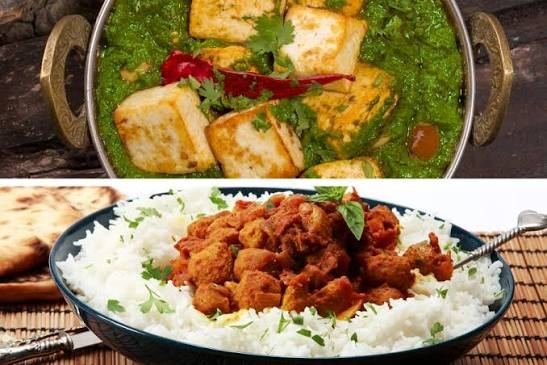
Paneer tastes good to most Indians without any convincing required. Paneer bhurji, palak paneer, paneer tikka — these are dishes people genuinely enjoy. Paneer fits naturally into Indian cooking without any adjustment period.
Soya chunks have a texture that takes some getting used to. Dry or under-prepared soya chunks have a slightly rubbery, dense texture that puts people off. The key is preparation — soaking in hot water first, squeezing out the water fully, then cooking in a flavourful gravy or masala. Done properly, most people find them perfectly fine. Done poorly, they taste like rubber erasers.
Soya chunks absorb flavour well — better than paneer in some ways. A well-made soya chunk curry can be genuinely good. The learning curve is just steeper than paneer.
For Muscle Gain
Both work. The question is quantity and calories.
To build muscle, you need adequate protein — roughly 1.6–2.2g per kg of bodyweight daily. For a 70kg person that’s 112–154g protein per day. Getting there on a vegetarian Indian diet without eggs is genuinely challenging.
Soya chunks make it significantly more achievable on a budget. 100g dry soya chunks — which costs about ₹25–30 — provides 52g protein. That’s a substantial contribution to a daily target without breaking the calorie bank.
Paneer can absolutely be part of a muscle-building diet. But relying on paneer alone for protein gets expensive fast and the calorie load from fat becomes a consideration in total diet planning.
Practical approach for muscle gain: Use both. Soya chunks as the primary high-volume protein source. Paneer as a flavourful addition in smaller quantities. Combines good protein intake with practical meal variety.
For Fat Loss
Soya chunks have a clear advantage here.
The protein-to-calorie ratio is significantly better. Getting 50g of protein from cooked soya chunks costs roughly 300–350 calories. Getting 50g of protein from paneer costs roughly 700–800 calories — more than double, mostly from fat.
On a fat loss diet where total calories are restricted, this matters. Every calorie saved on protein is a calorie available for carbohydrates or fats that add variety and satisfaction to meals.
Paneer can still be included during fat loss — just in controlled portions. A 50–70g serving of paneer in a meal is reasonable. A 200g serving less so, if you’re managing calories carefully.
Soya Chunks and Hormones — Addressing the Concern
This comes up every time soya is mentioned in Indian fitness content. “Soya badhata hai estrogen” — soya increases oestrogen.
The concern comes from phytoestrogens — plant compounds in soya that can weakly bind to oestrogen receptors. In theory, this could affect hormonal balance.
In practice: the research doesn’t support significant hormonal effects from normal dietary soya consumption in healthy adult men. Multiple studies have found no meaningful change in testosterone or oestrogen levels from regular soya consumption at amounts you’d eat as part of a normal diet.
Eating 50–100g dry soya chunks daily — which is roughly what you’d use as a protein source — is well within the range considered safe by nutrition research. The hormonal concern is based on extrapolations from very high doses, not realistic dietary amounts.
If you have existing hormonal issues or thyroid conditions, that’s a conversation worth having with a doctor specifically. For otherwise healthy people — the phytoestrogen concern at normal consumption levels isn’t well-supported by evidence.
Which Should You Choose
For maximum protein per rupee: Soya chunks. Not close.
For fat loss: Soya chunks — significantly better protein-to-calorie ratio.
For muscle gain on a budget: Soya chunks as primary protein, paneer occasionally for variety.
For taste preference and cooking simplicity: Paneer — lower learning curve, fits naturally into more Indian dishes.
For calcium: Paneer — dairy calcium is more bioavailable than plant sources.
For iron: Soya chunks — paneer has minimal iron.
For overall diet — honest recommendation: Use both. They complement each other nutritionally. Soya chunks for volume protein at low calorie cost. Paneer for flavour, calcium, and the satisfaction of eating something that tastes undeniably good.
Simple Ways to Use Both
Soya chunk preparation that actually works:
Boil in salted water for 5 minutes. Drain. Squeeze firmly to remove water — this step matters, don’t skip it. Then cook in any masala-based curry, pulao, or stir-fry. The flavour absorption after proper squeezing is excellent.
Quick high-protein meals:
Soya chunk bhurji — prepared like egg bhurji with onion, tomato, green chilli, spices. Fast, cheap, high protein.
Paneer and soya chunk sabzi — combine both in one dish. Gets the flavour of paneer with the protein volume of soya. Works surprisingly well.
Soya chunk pulao — soya chunks cooked with rice, whole spices, vegetables. One-pot meal, solid protein, filling.
The Bottom Line
Soya chunks have more protein per rupee, better protein-to-calorie ratio, and are more practical for hitting high protein targets on a vegetarian Indian diet. Paneer tastes better to most people, has more calcium, and fits more naturally into everyday Indian cooking.
Neither is a complete answer on its own. Together they cover more nutritional ground than either does individually.
If budget and protein efficiency are the priority — soya chunks are the answer. If you can include both — that’s the better long-term approach for most Indian vegetarians trying to eat more protein.
Nutritional values are approximate and vary by brand and preparation method. If you have thyroid conditions or soy allergies, consult a doctor or dietitian before significantly increasing soya intake.