Walk into any supplement store in India right now and the pre-workout section has exploded. Fifty different products, aggressive packaging, names like "Rage" and "Annihilate" and "Nuclear." Every one of them promising the best session of your life.
And somewhere between the marketing and the actual science, most people have no idea what's in these things or whether any of it matters.
So let's actually go through it. What the main ingredients do, what the evidence says, who genuinely benefits, and who is essentially paying ₹2,000–3,000 a month for expensive caffeine with a lot of tingling.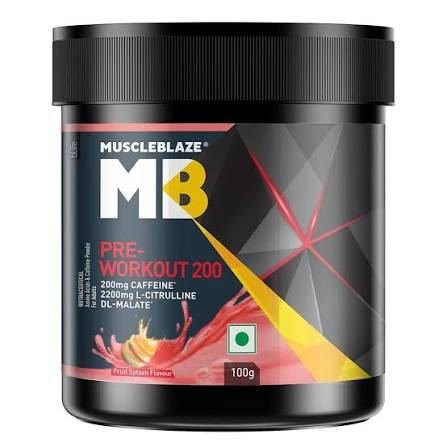
First — What Even Is Pre-Workout
Pre-workout is a category of supplement, not a specific thing. The term just means a product you take before training to improve performance in some way.
What's actually inside varies enormously. Some products are mostly caffeine with flavouring. Others contain a dozen ingredients at various doses. Some of those doses are effective. A lot of them — particularly in cheaper Indian market products — are too low to do anything meaningful. This is called "fairy dusting" — listing an ingredient on the label at a dose that sounds impressive but is actually below what research shows to be effective.
Understanding the three main ingredients tells you most of what you need to know about whether any specific product is worth taking.
Caffeine — The One That Actually Works 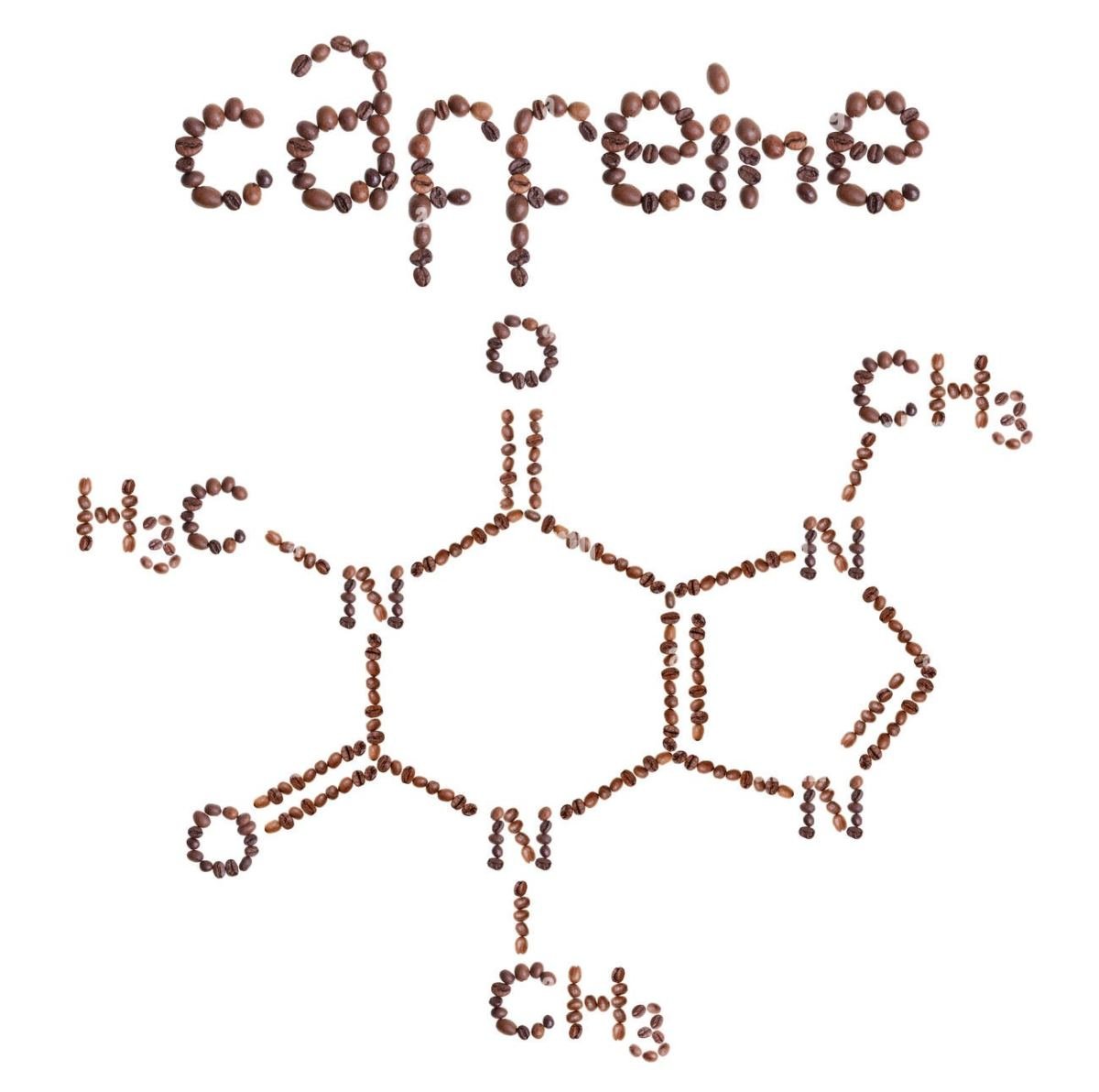
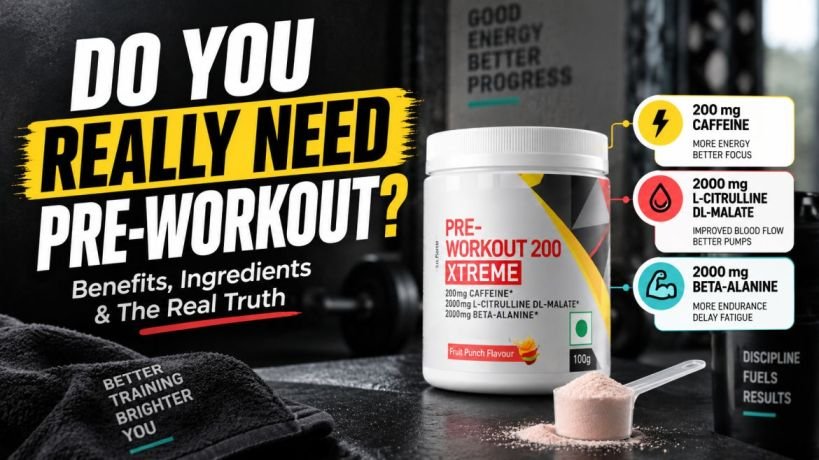
No surprises here. Caffeine is the most researched performance-enhancing substance in sports science and it genuinely works.
What it does: blocks adenosine receptors in the brain. Adenosine is the chemical that builds up through the day and makes you feel tired. Block those receptors and the fatigue signal doesn't get through — you feel more alert, more motivated, reaction time improves, perceived exertion during exercise drops. That last one matters more than people realise — the same workout simply feels easier with caffeine on board.
Research consistently shows caffeine improves performance in endurance exercise, strength training, team sports, and high-intensity interval work. It's one of the few supplements where the evidence is genuinely strong across multiple types of exercise and multiple populations.
Effective dose: 3–6mg per kg of bodyweight. For a 70kg person that's 210–420mg. Most pre-workouts contain 150–300mg per serving. A strong cup of filter coffee has roughly 80–120mg.
The honest part: if you're already drinking two or three cups of coffee daily, your caffeine tolerance is probably high enough that a standard pre-workout dose isn't doing much extra. Habitual caffeine users get significantly less performance benefit than people who cycle off caffeine periodically.
Side effects worth knowing: anxiety, elevated heart rate, disrupted sleep if taken too close to evening. The sleep disruption one is significant — training performance is directly linked to sleep quality. Taking pre-workout at 7pm to train at 8pm and then sleeping badly at midnight is a net negative, not a positive.
L-Citrulline — The Blood Flow One
Less famous than caffeine. Arguably as useful for the right person.
L-citrulline is an amino acid that converts to arginine in the kidneys, which then produces nitric oxide. Nitric oxide dilates blood vessels — increases blood flow to working muscles during exercise.
The practical effects: better muscle pumps during training, potentially improved endurance because more oxygen and nutrients reach the muscles, and some evidence for reduced muscle soreness post-training.
The research is decent but not as slam-dunk as caffeine. Studies show improvements in high-rep endurance performance, reduced fatigue in repeated-effort tasks, and improved oxygen efficiency. For bodybuilding-style training where pump and muscle fullness matter — citrulline is genuinely useful.
Effective dose: 6–8 grams of L-citrulline, or 8–10 grams of citrulline malate (a combined form). This is where most Indian market pre-workouts fall short badly. Many products contain 1–3 grams of citrulline malate and list it prominently on the label. That's well below the effective dose. Check the label — if the citrulline dose isn't at least 6 grams of pure L-citrulline, it's mostly decoration.
Side effects: Minimal at recommended doses. Mild stomach discomfort at very high doses occasionally. Generally well-tolerated.
Beta-Alanine — The Tingling One
If you've ever taken a pre-workout and felt a weird prickling sensation on your face, neck, and hands about 20 minutes later — that was beta-alanine. The sensation is called paresthesia. It's harmless. It's also why some people think pre-workout is "kicking in" when really it's just one specific ingredient causing a nerve response.
What beta-alanine actually does: it combines with histidine in muscle tissue to form carnosine. Carnosine buffers acid in muscles during intense exercise — delays the burning, fatiguing feeling that builds up during high-rep sets or sustained intense efforts.
The research shows beta-alanine is most effective for exercise lasting 60 seconds to 4 minutes — so high-rep sets, interval training, combat sports rounds, cycling sprints. For single heavy lifts or short explosive efforts, the benefit is minimal.
Effective dose: 3.2–6.4 grams daily. Importantly — beta-alanine works through accumulation in muscle tissue, not acutely. Taking it once before a session gives you the tingle but not the full carnosine-building benefit. It needs to be taken consistently over weeks to build up carnosine levels meaningfully.
The honest verdict: useful for people doing high-rep training, endurance intervals, or sports with repeated intense efforts. Less relevant for someone primarily doing heavy low-rep strength work.
Other Ingredients You'll See on Labels
Creatine — sometimes included in pre-workouts, sometimes not. If it's there at 3–5 grams, that's useful and you'd be getting your daily creatine dose as part of the pre-workout. If it's less than 3 grams, it's insufficient. Check the dose.
B vitamins — very commonly included. Very minimal performance benefit in people who aren't deficient. Mostly makes the urine expensive.
Tyrosine — amino acid supporting dopamine and norepinephrine. Some evidence for improved focus under stress. Low priority but not harmful.
Taurine — frequently included, inconsistent evidence for performance. Fine. Not the reason to buy any product.
Beetroot extract / nitrates — actually has decent evidence for endurance performance through nitric oxide pathways, similar mechanism to citrulline. Worth having if present at meaningful doses.
Who Actually Benefits From Pre-Workout
Genuinely useful for:
People training early morning who struggle with energy and motivation. Caffeine alone solves most of this — doesn't have to be a full pre-workout product.
People doing high-volume, high-rep training where endurance within sessions matters. Citrulline and beta-alanine at proper doses add something real here.
Experienced lifters who've plateaued and want a performance edge on the margin. Once training, nutrition, sleep, and recovery are dialled in — then supplements add a few percentage points.
Athletes in sports with repeated intense efforts — combat sports, team sports, interval-based training.
Probably not worth it for:
Complete beginners. The training stimulus itself is so novel that performance is limited by technique, not energy. A banana and water does the same job.
People with poor sleep, high stress, or inconsistent training. Supplements optimise a system that's already working. They don't fix broken foundations.
Anyone sensitive to stimulants or with cardiovascular concerns — caffeine pre-workouts elevate heart rate. Not suitable for everyone.
People training in the evening within four hours of sleep. The sleep disruption from caffeine costs more than the performance benefit gains.
The Indian Market Reality
Most pre-workouts sold in India — especially in the ₹800–1,500 range — are underdosed on the ingredients that matter and overdosed on caffeine and flavouring.
Before buying anything, check three numbers on the label:
Caffeine: is it 150mg minimum per serving?
L-citrulline: is it 6 grams or more of pure citrulline?
Beta-alanine: is it 3.2 grams or more?
If all three are at effective doses, the product is worth considering. If any of them are significantly below — and most cheaper products are — you're buying marketing, not performance.
Alternatively: buy the ingredients separately. Caffeine tablets are available for almost nothing. Bulk L-citrulline powder is available on Amazon India. Beta-alanine powder is cheap and easy to find. Mix them yourself, know exactly what you're taking, pay a fraction of the branded price.
The Bottom Line
Pre-workout isn't necessary. But it's not a scam either.
Caffeine works. L-citrulline at proper doses works. Beta-alanine at proper doses and taken consistently works. The problem is most products either underdose these ingredients or bury them under fifteen other things that do very little.
If your training, sleep, and nutrition are solid — a properly dosed pre-workout adds something real on the margin. If they're not — sort those first. No supplement fixes poor recovery or inconsistent training.
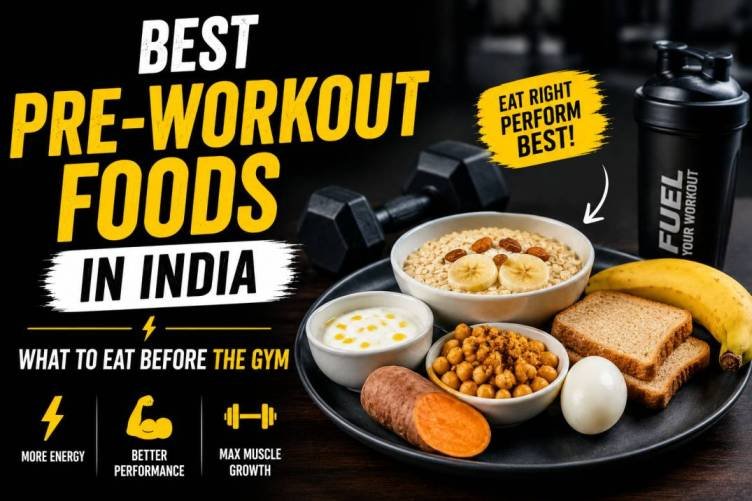
And if you just need energy before the gym? Honestly. Strong chai, a banana, and 20 minutes. Works fine.
Not medical advice. If you have heart conditions, hypertension, or anxiety disorders, consult a doctor before taking caffeinated supplements.