Cortisol Belly: Why Stress Is Making You Fat & What To Actually Do About It
My cousin gained 8 kilos in a year. Desk job, Pune, post-pandemic. Wasn't eating more than before. Wasn't skipping the gym either. Just... slowly, steadily, the belly came. Doctor said "lifestyle." Nutritionist said "eat less, move more." Neither asked about stress.
That bothered me.
Because the stress part — that's actually the whole story. And somehow it keeps getting left out.
Before Anything Else — What Is Cortisol
Okay so your body makes this hormone called cortisol. Adrenal glands produce it — two small things sitting above your kidneys that have an outsized influence on basically everything.
Cortisol follows a rhythm. High in the morning — that's partly what pulls you out of sleep and gets you functional. Drops gradually through the day. Low at night. That's normal. That's healthy.
It does genuinely important things. Manages blood sugar. Controls inflammation. Helps your body access stored energy when needed. Without cortisol, your body can't respond properly to stress at all.
The issue isn't cortisol. The issue is when it stops following that rhythm and just stays elevated. Constantly. For months.
That's what we're talking about.
The System Was Built for Five-Minute Problems
Here's the thing about the stress response. It evolved for immediate physical threats. Something dangerous happens — the body floods with cortisol, blood sugar spikes to fuel muscles, digestion pauses because digesting your lunch is irrelevant when you're running, heart rate climbs. Then the threat passes. Cortisol drops. Everything returns to normal within minutes.
The entire design assumes short-term problems.
2026 stress doesn't have an off switch.
Work pressure that's been building since 2022. EMI you're not sure about. A family situation with no clean resolution. Forty-five minutes in traffic, twice daily. A phone that delivers bad news constantly. A to-do list that adds items faster than you clear them.
None of that resolves in five minutes. None of that sends the "threat passed" signal to your adrenal glands. So they keep going. Cortisol keeps coming. Day after day after day.
And here's what that does to your body.
Why the Fat Goes Specifically to the Belly
This is the bit most people haven't heard.
Visceral fat — the deep fat packed around your abdominal organs, not the pinchable stuff under the skin — has more cortisol receptors than fat anywhere else in the body (Bjorntorp, Obesity Reviews, 2001). So when cortisol is chronically elevated, that region preferentially accumulates fat. The body is essentially choosing to store energy there.
Why? Evolutionary theory says visceral fat is metabolically active — easier to mobilise quickly when the body thinks it needs fuel for a threat. So the stressed body stockpiles energy near the engine, so to speak.
Several things happen in combination:
Cortisol raises blood glucose. Your body is preparing for action that never actually happens. That blood glucose spike triggers insulin. Chronically high insulin means the body is in fat storage mode much of the day.
Cortisol makes you hungry — specifically for dense, caloric food. Sugar, salt, fat. This isn't just emotional eating. It's a hormonal signal saying "consume energy, a threat is happening." The drive to raid the kitchen at 11pm when you're stressed is partly physiological.
Cortisol breaks down muscle. It's catabolic — it cannibalises tissue for quick energy. Less muscle means slower metabolism means the same meals that were maintenance before now produce slow fat gain.
Cortisol disrupts sleep. Bad sleep raises cortisol the next day. Which disrupts sleep again. Which raises cortisol. This particular loop is brutal and most people are in it without connecting the two.
Even without any change in weight on the scale — cortisol can redistribute fat toward the abdomen. Same number on the weighing machine. Waist measurement quietly creeping up. That's this.
Do You Have This
No single symptom. It comes as a cluster and people usually attribute each piece to something separate.
Belly fat that specifically won't move — does not respond to dieting the way fat elsewhere does. Tired but wired — the exhausted-but-can't-switch-off feeling that so many working Indians describe. Sleep that's long enough on paper but leaves you unrefreshed. The 3pm crash. Evening cravings that feel almost compulsive — sweet or salty or both. Bloating. That low-grade brain fog where simple things take more effort than they should.
For women — this often gets entirely attributed to thyroid issues or perimenopause. Those can absolutely be involved. But cortisol is frequently an independent driver that never gets addressed because the connection between "I've been very stressed for two years" and "my belly won't go away" doesn't get made.
Can be confirmed with testing — morning serum cortisol, salivary cortisol at multiple points through the day, or 24-hour urine cortisol. If this feels like more than lifestyle stress, that's a conversation with an actual doctor, not something to diagnose from a blog.
What Genuinely Helps
Not "just relax." Not "do yoga and think positive." Actual, specific things.
Sleep — and I mean the consistency of it
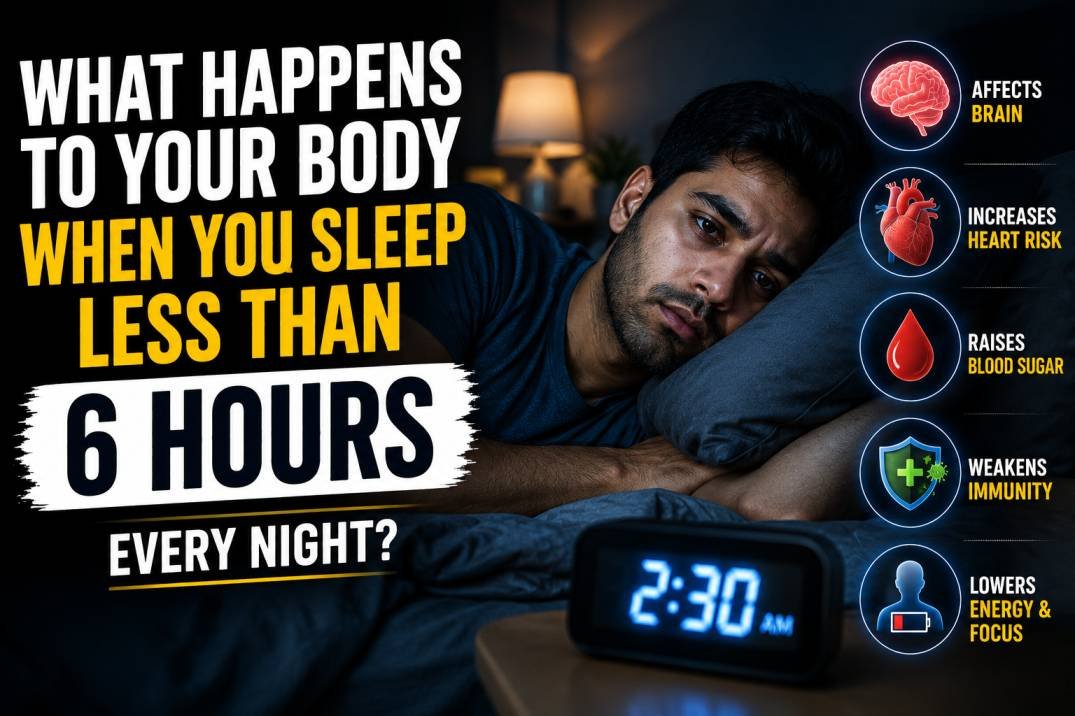
Cortisol regulation resets during sleep. Chronic under-sleeping — under 6.5, 7 hours — keeps baseline cortisol elevated regardless of what else you do. No supplement compensates for this. No exercise routine compensates for this.
But here's the specific part that matters: consistent timing. Same wake time every morning including weekends. Sounds minor. Is not. The cortisol rhythm is partly clock-driven. Irregular sleep patterns keep it dysregulated even when total hours look okay. This one change — wake time consistency — is genuinely one of the highest-return interventions for cortisol regulation.
Exercise — but not the punishing kind
Regular moderate training lowers long-term cortisol. Builds the muscle that raises resting metabolism. Improves insulin sensitivity. Produces changes in brain chemistry that reduce stress reactivity over time.
The catch: very intense, very long training sessions spike cortisol acutely. For someone already chronically stressed — and I mean someone who's running on fumes, sleeping badly, under sustained pressure — adding brutal two-hour daily workouts can worsen the hormonal situation. Three to five moderate sessions weekly, 45–60 minutes, works better for this specific goal than grinding yourself.
Food and blood sugar
Skipping meals is itself a cortisol stressor — low blood glucose triggers a cortisol response. Eating protein at every meal — genuinely enough protein, 1.2 to 1.6 grams per kg of bodyweight minimum — reduces the body's catabolic drive. Meals that combine protein, fat, and fibre blunt the glucose spikes that keep the cortisol-insulin cycle running.
The most common mistake: eating very little during the day then a huge dinner. That pattern maximises blood sugar instability.
Coffee timing — specifically
Cortisol peaks naturally in the first hour after waking. Adding caffeine on top of that peak amplifies the spike and often causes a harder crash later. Pushing first coffee to 90 minutes after waking tends to produce noticeably steadier energy through the morning for most people who try it. Also cutting caffeine after early afternoon — 1pm or 2pm latest — makes a real difference to sleep quality within days.
Two free changes. Worth trying for two weeks.
Actual stress management — specific not vague
Slow exhale breathing. Longer exhales than inhales — four counts in, six to eight counts out — activates the parasympathetic nervous system. Measurably reduces cortisol. Even five minutes before bed changes the physiological state. It's not meditation, it's not spiritual, it's just breathing in a way that triggers a different nervous system response.
Walking outside. Not for fitness — just walking in a natural environment. Research on this is consistent and surprisingly strong. Even a neighbourhood park. Even 20 minutes, three times a week. Outdoor natural environments specifically reduce cortisol in ways treadmill walking doesn't fully replicate.
Social time with people who feel safe. This one sounds soft. The evidence isn't. Genuine social connection is one of the strongest cortisol buffers documented. Loneliness and isolation independently raise cortisol. A country that's become increasingly isolated post-pandemic, where people are working from home and spending evenings on screens — this matters more than most fitness content acknowledges.
Screen time in the evening. Chronic low-level stimulation from phones keeps the sympathetic nervous system activated all night. The body never gets a clear "threat over, stand down" signal. Putting the phone away 30–60 minutes before bed — not as a productivity tip, but as a physiological intervention — reduces the cortisol load the body carries into sleep.
Supplements with actual research behind them
Ashwagandha. Multiple randomised controlled trials showing meaningful reductions in serum cortisol with standardised extract — KSM-66 or Sensoril, 300–600mg daily. Not marketing. Actual studies. The most-cited trial found a 27.9% reduction in serum cortisol after 60 days versus 7.9% in the placebo group (Chandrasekhar et al., Indian Journal of Psychological Medicine, 2012). Widely available in India. Himalaya makes one. Various sports nutrition brands carry it. Six weeks minimum to judge the effect.
Magnesium. Deficiency is associated with elevated cortisol and poorer stress resilience. Many people are chronically low — modern soil depletion affects food mineral content. Magnesium glycinate or malate at 300–400mg at night supports cortisol regulation and sleep simultaneously. Cheap, safe, widely available.
Vitamin D. Deficiency disrupts the HPA axis — the system that controls cortisol output. Extremely common across India despite the climate. A simple blood test costs almost nothing. Worth knowing your level.
The Honest Part
You cannot calorie-restrict your way out of a cortisol problem.
Severe calorie cutting is itself a physical stressor. Cortisol rises in response to it. People who aggressively diet while chronically stressed often find fat loss stalls, or goes everywhere except the abdomen, or returns quickly once they ease up. That's not personal failure — that's the body responding predictably to the wrong tool.
The belly fat is a signal, not just a cosmetic problem. It's the body saying the current load — work pressure, sleep debt, emotional stress, overtraining, undereating — has been running too long.
Treating only the fat without addressing the signal produces temporary results at best.
Start Small — One Thing
Pick one thing from this article.
Fix your wake time. Push back your coffee. Walk outside three times this week. Get a vitamin D test. Try ashwagandha for six weeks.
One thing, done consistently. The body responds. Cortisol starts coming down. And when it does, the metabolism, the energy, the sleep, the fat — they tend to follow.
Stress belly isn't permanent. But it needs different tools than ordinary fat gain. That's the part worth understanding.