Sports Nutrition & Weight Management: What Nobody Actually Tells Students and Athletes (2026)
Let me tell you something that happens constantly in gyms and sports grounds across India.
There's always that one guy — trains harder than anyone else, never misses a session, genuinely puts in the work. And yet three months later he looks exactly the same. Same weight, same performance, same energy levels. He starts blaming his genetics. Maybe his sleep. Maybe his program needs changing.
Nobody looks at what he ate today. Or yesterday. Or the whole past month.
That's the thing about nutrition — it's invisible until it isn't. You don't feel yourself under-recovering. You don't notice the energy you're leaving on the table by skipping breakfast before practice. The effects are slow and quiet, and by the time you connect the dots, you've already wasted months of hard training on a body that simply didn't have the raw materials to respond properly.
I've seen this with students especially. Academic pressure, hostel food, irregular schedules, tight budgets — nutrition becomes the last thing anyone thinks about. And then people wonder why they're always tired, always sore, never really improving despite genuinely trying.
This guide is for those people. Not the professional athlete with a personal dietitian. The student juggling college and training. The recreational athlete who's serious about getting better but has no idea where to start with food. The person who wants to lose some fat without wrecking their performance. All of it, explained simply, without the supplement industry noise.
What Sports Nutrition Actually Means — In Plain Language
Forget the fancy definition for a second.
Sports nutrition is just — eating in a way that matches what you're asking your body to do. That's it. If you're sitting at a desk all day, your body needs a certain amount of energy and nutrients to function. The moment you add regular intense training to that picture, the requirements shift. More energy needed. More protein for repair. More attention to when you eat, not just what.
The reason this matters is that a lot of people treat their diet like it's completely separate from their training. They work hard in the gym and eat randomly everywhere else. Those two things are not separate. Training breaks your body down. Nutrition is how it builds back up. One without the other is just damage without repair.
And here's what catches most students off guard — the gap between what an active person needs nutritionally and what they're actually consuming is often huge. Not slightly off. Genuinely huge. Half the protein they need. Skipping meals regularly. Barely drinking water. Training five days a week on a diet that would barely sustain someone sedentary.
No supplement fixes that gap. Only actual food does.
How Food Directly Affects How You Train, Recover, and Look
Energy first, because this one's most obvious.
Your body's preferred fuel during hard training is carbohydrates — stored in your muscles and liver as glycogen. When those stores are well stocked, you train hard, you recover between sets, you maintain quality toward the end of a session. When they're low — from skipping meals, eating too little, or training on empty — you fade early, feel sluggish, and struggle to push through the last part of any session. That last part of the session, by the way, is often where most of the adaptation happens. So you're not just feeling worse — you're actually getting less from the same time investment.
Recovery is where most student athletes completely drop the ball though. After training, your muscles are literally damaged — micro-tears that need repairing. Your glycogen is partly depleted. Your body is in a state of breakdown that needs to shift to a state of building. That shift requires protein for tissue repair, carbohydrates to restore energy stores, and micronutrients — zinc, magnesium, vitamin C among others — that most people never think about.
When you don't eat properly after training, recovery drags. You're sore longer. You feel flat going into the next session. Do this consistently and training quality drops week over week even though effort stays the same. It's one of those slow degradations that sneaks up on you.
And then there's body composition — which is really just the long-term result of everything above. Muscle grows when training stimulus meets adequate protein and sufficient calories. Fat reduces when you consistently eat less than you burn. Neither happens optimally when nutrition is random and inconsistent.
Weight Management — Properly Explained, No Gimmicks
This section matters because weight management advice online is genuinely terrible most of the time.
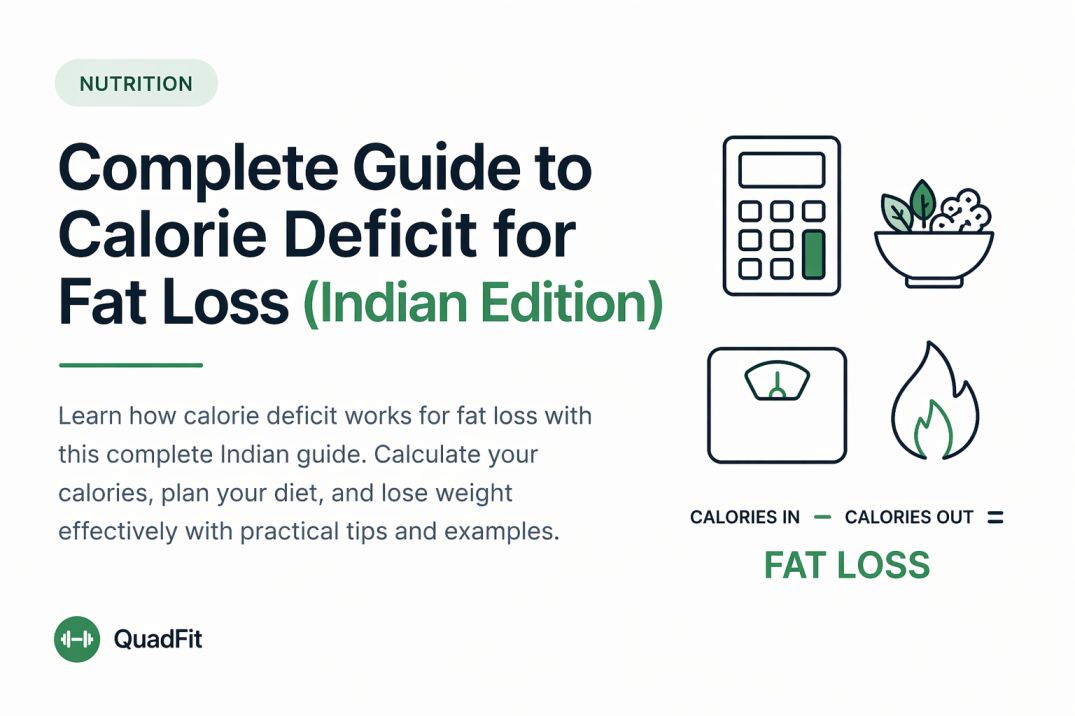
The foundation is simple: body weight changes based on the relationship between calories you consume and calories you burn. Eat more than you burn consistently — weight goes up. Eat less — weight goes down. Eat roughly the same — it stays stable. Every diet, every eating protocol, every trending approach works through this mechanism whether the person selling it admits it or not.
Fat loss specifically needs a calorie deficit. Your body needs to be taking in less energy than it's spending so stored fat gets used to cover the difference. Where people go wrong is making that deficit too aggressive. Dropping calories dramatically all at once seems logical — bigger deficit, faster results. In reality it causes muscle loss alongside fat loss, kills training performance, creates constant hunger and fatigue, and almost always ends in a rebound because it's simply not sustainable.
A moderate deficit — roughly 300 to 500 calories below maintenance — loses fat steadily while preserving muscle and keeping training performance reasonable. Slower on paper. Far more effective in practice because you can actually stick to it for months.
For student athletes specifically — don't diet hard going into a sports season. You need energy to train. You need protein to recover. Slashing calories right before a period of high performance demand leaves you weaker, slower, and more vulnerable to injury exactly when you need the opposite.
Muscle gain is the reverse situation — a slight calorie surplus above maintenance, structured training, and consistent protein intake. The surplus doesn't need to be large. An extra 200 to 300 calories daily above maintenance while training and hitting protein targets is enough for most people to build muscle without piling on unnecessary fat. The "eat everything and bulk" approach just creates more fat to deal with later.
Maintenance — which most people completely skip over — is actually an important phase. Learning what your body needs to stay at a composition you're happy with, and building habits around that, prevents the endless cycle of cutting and gaining that a lot of people get stuck in.
Protein, Carbs, Fat — What Each One Is Actually Doing
Protein. This one gets the most attention and broadly deserves it for active people. Muscles are made of protein. When training damages muscle tissue, protein provides the amino acids to repair and rebuild it. But protein also makes hormones, supports immune function, keeps you fuller longer than carbs or fat at equivalent calories, and helps preserve muscle when you're in a fat loss phase.
How much do you need? Research on active people generally lands between 1.6 and 2.2 grams per kilogram of body weight daily. A 65 kg person needs roughly 104 to 143 grams a day. For context, one egg has about 6 grams. A bowl of dal has maybe 8 to 12 grams depending on portion. A 100 gram serving of chicken breast has about 31 grams. Most student athletes, if they actually tracked for a week, would find they're hitting maybe half their target.
Good protein sources that are practical and affordable in India — eggs, chicken, fish, paneer, curd, dal, rajma, chole, soya chunks, roasted chana. Getting protein from multiple sources spread across the day works better than trying to hit the whole target in one meal.
Carbohydrates. These have been unfairly demonised in fitness culture for years, mainly because of low-carb diet popularity. For sedentary or lightly active people reducing carbs can work for fat loss — sure. For someone training hard multiple times a week at moderate to high intensity, carbohydrates are the primary fuel and cutting them heavily while training hard just means tired, underperforming workouts and slow recovery. Rice, roti, oats, sweet potato, fruits, legumes — all solid sources with actual nutritional value beyond just energy.
Fat. Essential, not optional. Hormones are synthesised from fat. Joints need it. Brain function depends on it. Fat-soluble vitamins can't be absorbed without it. The old idea that dietary fat causes body fat accumulation has been broadly corrected — excess calories from any source cause fat gain. Healthy fat sources like nuts, seeds, ghee in reasonable amounts, coconut, and fatty fish all belong in an active person's diet without guilt.
Students Versus Competitive Athletes — Why the Distinction Matters
A student who hits the gym three times a week and plays recreational football on weekends is not the same as a state-level athlete in double training sessions. Giving them identical nutrition advice is either overwhelming the first person unnecessarily or leaving the second person underprepared.
For the recreational student athlete, the priorities are simple. Eat consistently — don't skip meals. Get protein at most meals. Eat enough carbohydrates to fuel training. Drink water throughout the day. Have something useful after training. That's genuinely most of it. No need for precise tracking, periodised nutrition plans, or supplement stacks.
For the competitive athlete with a heavy training load, things get more managed. Total calories need to actively match substantially higher expenditure. Protein targets need to be met every day, not just when it's convenient. How many carbohydrates you eat might shift based on how heavy a training day is. Post-session nutrition timing matters more because sessions are more frequent and recovery windows are shorter. During long sessions, hydration and electrolyte replacement become performance variables.
Mixing these two contexts up causes problems either way. A competitive athlete eating like a casual gym-goer is under-fuelling serious training. A recreational student stressing about nutrient timing and advanced protocols is creating unnecessary anxiety around something that should be straightforward.
Pre and Post Training — What to Actually Eat and When
Before training, the goal is simple. Show up with energy. Don't have anything in your stomach that'll cause problems when you're working hard.
A proper meal two to three hours before training should centre on carbohydrates, include some protein, and keep fat and fibre relatively low — both slow digestion and can cause genuine discomfort during intense exercise. Rice with dal and curd, roti with a light sabzi, oats with fruit and an egg — nothing complicated.
If training is within an hour, a small snack is better than a full meal. A banana, some bread with honey, a handful of dates, a small bowl of poha. Fast-digesting, light, effective.
After training, the body is primed to use nutrients for recovery — muscle repair starts, glycogen restoration begins. Getting protein and carbohydrates in within about an hour of finishing genuinely makes a difference to how you feel the next day. Rice with rajma or dal, curd with fruit and chana, eggs on toast, or a protein shake with a banana if time is short. The 30-second anabolic window idea is overstated but the general principle — eat something useful after training, don't wait five hours — is sound.
Mistakes That Are Incredibly Common and Completely Fixable
Skipping breakfast is probably the single most widespread issue. Training or playing sport without having eaten since the previous evening consistently hurts both performance and recovery. The fix doesn't need to be elaborate — overnight oats, curd with fruit, leftover food, even just eggs and toast. Quick and genuinely impactful.
Diet built mostly on processed food is the second big problem. Biscuits, chips, instant noodles, fried snacks, sugary drinks — these fill the stomach without providing anything the body can actually use for training and recovery. The occasional packet of chips isn't the issue. A diet where this is the majority of intake is.
Not getting enough protein — especially among vegetarian athletes — is extremely common. Most people significantly underestimate how much protein their foods contain and overestimate how much they're actually eating. Building awareness of which foods are actually good protein sources and making sure they feature at most meals is one of the most impactful changes a student athlete can make.
Ignoring hydration is the one that surprises people most when they look into it. Even 2% dehydration by body weight measurably reduces both physical and cognitive performance. Headaches, afternoon fatigue, poor concentration, sluggish training — all common symptoms of mild chronic dehydration that most people attribute to everything except not drinking enough water.
A Realistic Day of Eating for a Student Athlete
Not a prescription — just a practical example showing what this actually looks like on a normal day.
Breakfast: three scrambled eggs with two slices of whole wheat toast and a glass of milk or small bowl of curd alongside. Or oats cooked with milk, topped with a banana and some nuts, boiled egg on the side.
Mid-morning: a small handful of mixed nuts and a piece of fruit. Thirty seconds to sort out. Keeps energy stable before lunch without overthinking it.
Lunch: two or three rotis, a bowl of dal or rajma, a vegetable sabzi, curd. Adding paneer or chicken improves the protein content substantially and keeps you fuller into the afternoon.
Pre-training snack about an hour out: banana with a spoon of peanut butter, small bowl of poha, or some bread with honey.
Post-training: rice with dal and curd, or if time is genuinely short — protein shake with a banana and some roasted chana alongside.
Dinner: broadly similar structure to lunch. Protein source, carbohydrates, vegetables. Doesn't need to be anything fancy.
This is regular Indian household food. No expensive ingredients, no supplements required, no special preparation. Just some intentionality about what goes on the plate and when.
Where to Actually Start With This
Don't try to fix everything simultaneously. It won't stick.
Pick one thing that you currently do poorly and fix just that first. If breakfast is the problem — sort breakfast. If post-workout nutrition is the gap — fix that. If you realise you barely drink water — start there. One habit built properly compounds into the next one, and within a few months the cumulative difference in how you train, recover, and feel is significant.
Pay attention to signals your body is already giving you. Always tired by mid-afternoon? Probably not eating enough or not timing meals well around your day. Fading badly in the last part of training sessions? Pre-workout carbohydrates are likely too low. Not recovering between sessions despite adequate sleep? Post-workout nutrition and overall protein almost certainly need attention.
None of this requires apps, tracking, supplements, or a dietitian — though all of those can help when you're ready for that level of detail. It requires understanding the basics, building a few simple habits around them, and staying consistent long enough for those habits to actually show results.
The student who figures out their nutrition early has a compounding advantage over one who doesn't. Every month of training supported by decent nutrition is worth more than the same month of training on a random diet. That gap adds up faster than most people expect — and it starts closing the moment you decide to actually pay attention to what you're eating.