Two Deadlifts, One Question Everyone Gets Wrong
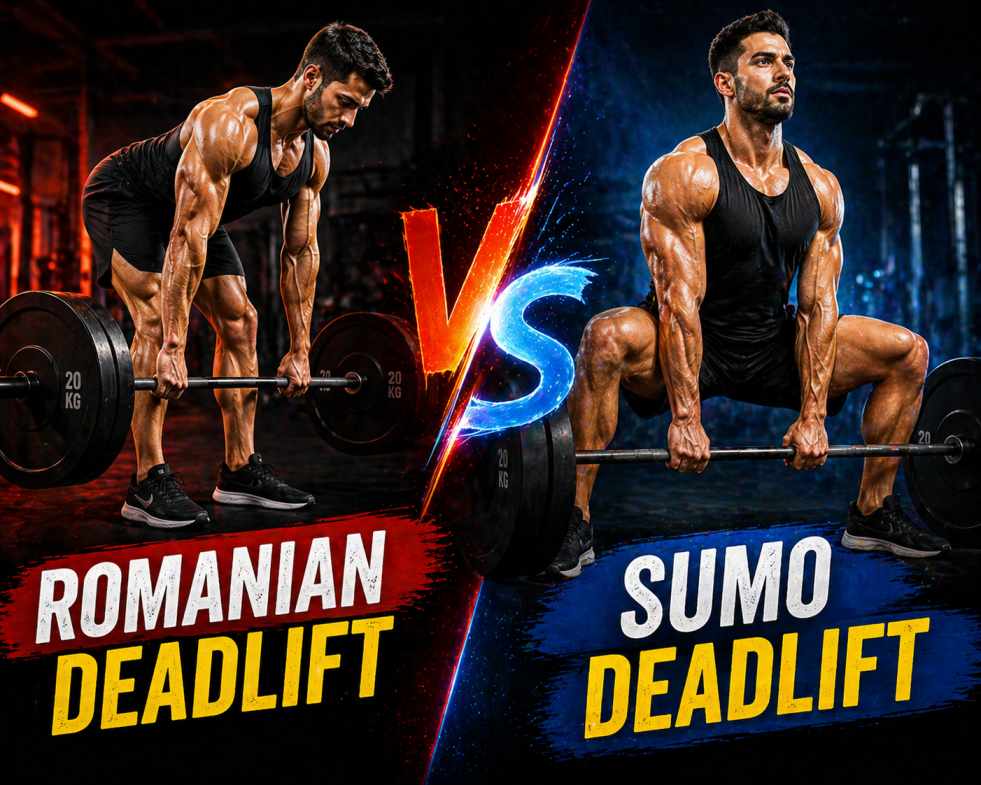
Walk into any gym and you'll see both of them being performed — often badly, occasionally brilliantly, and almost always with some debate nearby about which one is superior. The Romanian deadlift and the sumo deadlift are two of the most popular pulling movements in strength training, and the internet has no shortage of opinions on which one wins.
The problem with that debate is the framing. Asking which deadlift variation is "better" is like asking whether a hammer or a screwdriver is the better tool. The answer depends entirely on what you're trying to build, what your body looks like, how your joints move, and what your training history has been.
What isn't up for debate is that both movements are extraordinarily effective — and that most people who perform them are either using the wrong one for their goals or performing the right one with poor technique, which amounts to the same outcome.
In this guide, weight training coach Ankush Kumar (ISSA Certified), founder of The Quad Fitness Academy (TQFA), breaks down the Romanian deadlift and sumo deadlift from every angle — mechanics, muscle activation, strength carry-over, fat loss implications, injury risk, and how to decide which one belongs in your programme.
Understanding the Movements: Mechanics First
Before comparing results, you need to understand what each movement actually is and how it works biomechanically. Most gym-goers have a surface-level understanding at best, and that gap in knowledge leads to poor technique, wrong exercise selection, and missed results.
The Romanian Deadlift (RDL)
The Romanian deadlift is a hip hinge movement performed with a relatively narrow, hip-width stance and a straight or very slightly bent knee. Unlike a conventional deadlift where the bar starts from the floor, the RDL begins from a standing position — you unrack or lift the bar to hip height, then hinge at the hip by pushing your glutes backward while maintaining a neutral spine, lowering the bar along your legs until you feel a strong stretch in the hamstrings. You then drive your hips forward to return to standing.
The key mechanical feature of the RDL is that the knees remain mostly extended throughout. This places the emphasis almost entirely on the posterior chain — hamstrings, glutes, and to a lesser degree the erector spinae. Because the bar typically doesn't touch the floor between reps, there is constant tension on the hamstrings, making it one of the best exercises in existence for hamstring hypertrophy and lengthening strength.
Range of motion is determined by hamstring flexibility. Most athletes lower the bar to somewhere between mid-shin and the floor. Going deeper requires exceptional hamstring length and should never come at the cost of lumbar flexion.
The Sumo Deadlift
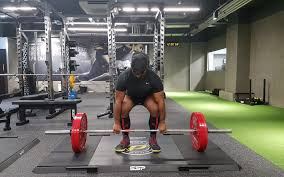
The sumo deadlift is a floor-pull variation performed with a significantly wider-than-hip stance, toes pointed outward at roughly 30–45 degrees, and hands gripping the bar inside the legs — hence the name, after the wide stance of sumo wrestlers. The torso stays considerably more upright than in a conventional deadlift, the hips sit lower at setup, and the movement pattern involves a simultaneous push of the floor and pull of the bar rather than the hip-dominant hinge of an RDL.
The wider stance and more upright torso fundamentally change which muscles bear the primary load. The sumo deadlift shifts emphasis toward the quadriceps, glutes, and hip adductors compared to the more posterior-chain-dominant conventional pull. The shorter range of motion — the bar travels a shorter vertical distance because the hips sit closer to the floor — means lighter technical loads can often be managed, though this doesn't mean it's easier.
Muscle Activation: What Each Movement Actually Builds
This is where the comparison gets genuinely useful. Understanding primary and secondary muscle activation helps you match the exercise to your specific physique goals.
Romanian Deadlift — Primary Muscles
Hamstrings (biceps femoris, semimembranosus, semitendinosus) The RDL is arguably the single best exercise for hamstring development in all of strength training. The combination of hip flexion under load, near-full knee extension, and the stretch under tension at the bottom position creates an exceptional stimulus for both hamstring hypertrophy and strength through a long range of motion. If building thick, developed hamstrings is a priority, the RDL has no equal.
Glutes (gluteus maximus) Hip extension is the primary mover in the RDL, and the glutes are the primary hip extensor. The stretch-shortening cycle at the bottom of the RDL — hips pushed back, glutes under tension in a lengthened position — is a powerful stimulus for glute hypertrophy. The RDL trains the glute in its lengthened range, which research increasingly shows produces superior hypertrophy compared to shortened-range glute work.
Erector Spinae The lower back musculature works isometrically throughout the RDL to maintain a neutral spine position under load. Over time, consistent RDL training builds significant lower back resilience and strength, even though the erectors are not the prime mover.
Secondary contributors: Adductors, calves (during the stretch), forearms and grip.
Sumo Deadlift — Primary Muscles
Glutes (gluteus maximus and medius) The sumo deadlift is an outstanding glute builder, arguably producing even greater gluteus maximus activation than the RDL at heavier loads due to the hip abduction and external rotation demands of the wide stance. The gluteus medius — often underdeveloped in conventional training — receives significant work from the sumo's hip abduction component.
Quadriceps This is the biggest differentiation from the RDL. Because the torso is more upright and the hips sit lower at setup, the knee extends significantly during the pull. The quads play a meaningful role in driving the floor away and locking the lift out. For athletes who want to develop quad strength alongside posterior chain work, the sumo deadlift offers something the RDL simply doesn't.
Hip Adductors The wide stance of the sumo deadlift places significant load on the inner thigh musculature throughout the movement. Consistent sumo training builds adductor strength in a way few exercises match, which has direct carry-over to athletic performance in sprinting, lateral movement, and sport-specific demands.
Upper Back (traps, rhomboids, lats) Because the bar must be kept close and the shoulders pulled back against a longer moment arm in some pulling positions, the upper back works hard in the sumo. Lat engagement throughout the pull helps keep the bar tight to the body and prevents forward breakdown.
Strength Development: Which Builds More Raw Power?
Both movements build strength, but the type and specificity of that strength differs.
The sumo deadlift allows most athletes to move heavier absolute loads. The reduced range of motion, more quad involvement, and mechanical advantages of the wide stance mean your sumo one-rep max will typically exceed your RDL one-rep max by a meaningful margin. This is why sumo deadlifting is popular in powerlifting — more weight on the bar, within the legal rules of the sport.
However, raw load is not the complete picture of strength development. The RDL builds strength through a longer range of motion, particularly in the stretched position of the hamstrings and glutes. Strength in the lengthened position transfers well to athletic performance, reduces injury risk in the hamstrings, and has significant carry-over to sprinting speed and jumping power.
For pure strength sport performance — powerlifting, specifically — if your leverages suit the sumo position (wider hips, shorter torso, good hip mobility), the sumo deadlift will typically allow you to lift more. For athletic performance, hamstring injury prevention, and overall posterior chain development, the RDL's strength gains through a longer range of motion are arguably more functional.
Muscle Growth: Which Produces Better Hypertrophy?
For hypertrophy, the comparison is more nuanced and depends on which muscle groups you're prioritising.
For hamstrings: The RDL wins clearly and decisively. The sustained stretch under load, the high time under tension, and the long range of motion make it the superior hamstring builder. If you want developed hamstrings, the RDL should be a non-negotiable in your programme.
For glutes: Both movements are excellent. The RDL trains the glute in its lengthened, stretched position under load — which emerging research suggests is superior for hypertrophy. The sumo deadlift offers heavy loading with strong hip extension demands. Including both, or rotating between them, is arguably the most complete approach to glute development.
For quads: The sumo deadlift wins. The RDL contributes almost nothing to quad development. If building the front of the thigh is a goal, the sumo deadlift is the better pulling option — though squats and leg press remain the primary quad builders in most programmes.
For overall posterior chain development: The RDL is the more complete posterior chain stimulus, training the hamstrings, glutes, and lower back in a synergistic pattern.
Fat Loss: Does It Even Matter Which One You Choose?
Here's a perspective that often gets lost in this debate: when it comes to fat loss, the specific exercise matters far less than the total training load, progressive overload, and caloric management.
That said, there are meaningful indirect differences worth noting.
Muscle mass drives metabolic rate. Both exercises build muscle. More muscle means higher resting energy expenditure over time. In that sense, whichever movement you train consistently and progressively will contribute to fat loss by increasing your lean mass.
Compound movements burn more calories during and after training. Both the RDL and sumo deadlift are heavy compound movements that recruit large amounts of muscle tissue and elevate post-exercise oxygen consumption. Neither is significantly superior to the other for caloric expenditure in a direct comparison.
Adherence is everything. The movement you can perform with better technique, that suits your anatomy, and that you actually enjoy training will produce more consistent progressive overload over time — and that consistency is what drives body composition change. Choosing a deadlift variation because it's biomechanically right for your body produces better long-term outcomes than forcing a movement that doesn't suit you.
Injury Risk and Who Each Movement Suits
This is arguably the most important part of the comparison for most recreational athletes.
The RDL: Who Should Be Cautious
The RDL requires good hamstring flexibility. Athletes with tight hamstrings who try to force excessive range of motion will inevitably compensate by rounding the lumbar spine, which places dangerous shear force on the lower back. If you have a history of lower back issues or limited hamstring length, the RDL demands careful progression and possibly deliberate range-of-motion limitation until flexibility improves.
The RDL is generally lower risk for the hips, knees, and groin than the sumo deadlift due to its narrower stance and reduced hip external rotation demand.
The Sumo Deadlift: Who Should Be Cautious
The sumo deadlift requires significant hip mobility, specifically external rotation and hip flexion. Athletes with hip impingement, labral issues, or limited hip external rotation will struggle to set up correctly and may experience hip pinching or groin discomfort at the bottom of the movement.
The wide stance also places adductor tendons under significant load — particularly for athletes new to the movement — and adductor strains from sumo deadlifting are not uncommon when load is progressed too aggressively without adequate tissue preparation.
General Guidance
For beginners or athletes with limited mobility, the RDL is typically the easier movement to learn and perform safely. The sumo deadlift demands more hip mobility and motor pattern learning but becomes extremely rewarding once the setup is dialled in. Neither movement should be loaded heavily until technique is solid. Coach Ankush Kumar's standard at TQFA: technique first, load second, always.
How to Programme Both Movements
The good news is you don't have to choose just one — and most well-designed programmes shouldn't force you to. Here's how to think about programming them together:
Lower body hypertrophy programme: Include RDLs as your primary hamstring and posterior chain builder (3–4 sets of 8–12 reps with moderate load). Sumo deadlifts can be used as a secondary pulling movement or rotated in training blocks to develop adductors, quads, and glute strength through a different pattern.
Strength programme: Use sumo deadlifts as your primary heavy floor pull if your anatomy suits it. Programme RDLs as a supplementary movement in the same session or a separate day to reinforce hamstring strength and injury resilience.
Athletic performance: RDLs belong in almost every athlete's programme for hamstring development and injury prevention. Sumo deadlifts are valuable for sports requiring lateral power and adductor strength — football, basketball, martial arts, wrestling.
Track Your Lifts and Fuel Your Training Right
Progressive overload is the engine of both strength and hypertrophy. You cannot achieve it without tracking. Knowing your working weights, your rep progression, and how your performance trends over time is what separates athletes who consistently improve from those who spin their wheels year after year.
- Log every session, every set, every weight at www.dayzero.fit — track your RDL and sumo deadlift progression side by side. See which movement responds better to your training, where your plateaus occur, and how your body adapts over time.
- Calculate your BMR, TDEE, and protein needs at quadfit.info/tool — strength and hypertrophy training only works when your nutrition supports it. Know your maintenance calories, your training surplus requirements, and your daily protein target before you expect either of these movements to build the muscle you're after.
The Verdict: Which Should You Choose?
Choose the Romanian Deadlift if:
- Hamstring development is a primary goal
- You want to build posterior chain strength and resilience
- You have good flexibility and want to train through a long range of motion
- You're an athlete where hamstring strength directly impacts performance — sprinting, jumping, field sports
- You have limited hip external rotation or mobility that makes sumo setup uncomfortable
Choose the Sumo Deadlift if:
- You want to develop glutes and adductors alongside your posterior chain
- You have the hip mobility to set up correctly without impingement
- You're interested in powerlifting and your anatomy suits a wider stance
- You want to incorporate more quad contribution into your pulling work
- Lower back sensitivity makes the more hinged RDL position uncomfortable
Use both if:
- You're running a complete lower body programme and want comprehensive muscle development
- You're an athlete who needs to train multiple movement patterns
- You want to cycle variation across training blocks to avoid accommodation
There is no universal winner. There is only the right tool for your body, your goals, and your current training phase.
Final Thoughts
The Romanian deadlift and sumo deadlift are both exceptional exercises that have earned their place in strength training for very good reasons. They train different muscles with different emphases, they suit different body types, and they produce different long-term adaptations. Understanding those differences — rather than blindly following a trend or an influencer's preference — is what allows you to make intelligent decisions about your own programme.
Learn both. Respect both. Apply them with intention.
As coach Ankush Kumar puts it at TQFA: "The best exercise is the one you can perform correctly, consistently, and with progressive intent over a long period of time. Technique and consistency beat exercise selection every single time."