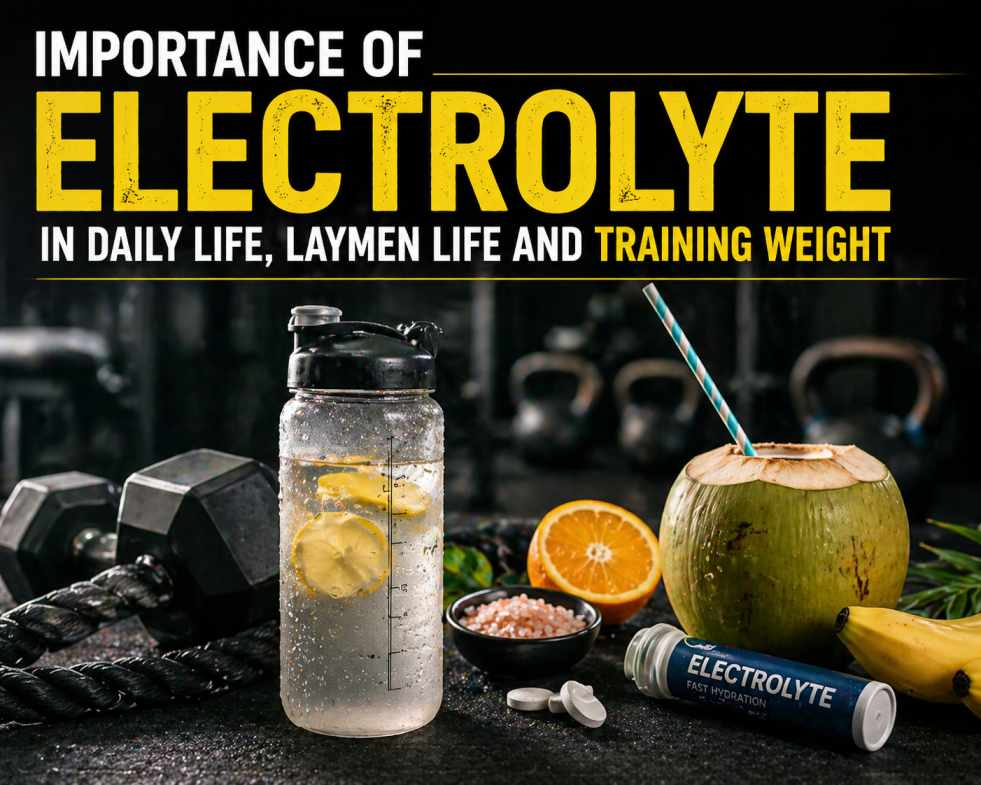
Why Electrolytes Matter: Importance in Daily Life, Workouts & Hydration (Complete Guide)
Meta Description: What are electrolytes and why are they important? Learn how electrolytes affect hydration, workouts, energy, and daily health in this complete guide.
By Mr. Ankush Kumar | Day Zero & QuadFit Coach | Nutrition and Fitness Trainer Educator | Founder, The Quad Fitness Academy Institute
─────────────────────────────────────────────────────────────────────────────
INTRODUCTION
You have probably heard the word "electrolytes" thrown around at the gym, on a sports drink label, or in a health article online. But very few people actually understand what electrolytes are, how they work inside your body, and why ignoring them can silently destroy your energy, performance, and long-term health.
As a nutrition and fitness trainer educator and the founder of Quad Fitness Academy Institute, I — Ankush Kumar, also known in the fitness community as Day Zero — have worked with hundreds of students and athletes who were drinking water every single day but still felt fatigued, cramping, dizzy, or mentally foggy. The missing piece? Electrolytes.
This complete guide is going to break down everything you need to know about electrolytes — from basic science to practical daily habits — in a way that is easy to understand and immediately actionable.
─────────────────────────────────────────────────────────────────────────────
SECTION 1: WHAT ARE ELECTROLYTES?
Electrolytes are minerals that, when dissolved in water, carry an electrical charge. This electrical charge is what makes them so powerful inside the human body. They regulate everything from nerve signals and muscle contractions to the balance of fluids inside and outside your cells.
The major electrolytes that matter most for daily health and physical performance are:
- Sodium (Na+)
- Potassium (K+)
- Magnesium (Mg2+)
- Calcium (Ca2+)
- Chloride (Cl-)
- Phosphate (PO4 3-)
- Bicarbonate (HCO3-)
Each of these minerals has a unique and irreplaceable role. Think of them as the electrical wiring of your body. Without them, signals cannot travel, muscles cannot fire, and organs cannot function correctly.
Here is something important that most people do not realize: drinking plain water, even in large amounts, does not guarantee proper electrolyte balance. In fact, drinking excessive plain water without electrolytes can actually dilute the concentration of minerals in your blood — a dangerous condition called hyponatremia.
─────────────────────────────────────────────────────────────────────────────
SECTION 2: THE ROLE OF ELECTROLYTES IN DAILY LIFE
You do not have to be an athlete to need electrolytes. Every single person — young or old, active or sedentary — depends on proper electrolyte balance to function throughout the day. Here is why.
2.1 Nerve Function and Brain Health
Your brain and nervous system communicate using electrical signals. Sodium and potassium are the two minerals most responsible for generating these signals. Every time you think, blink, breathe, or respond to something, your nerve cells are firing electrochemical impulses that depend entirely on sodium-potassium balance.
When electrolytes are low, nerve communication slows. This is why one of the earliest signs of electrolyte imbalance is mental fog, difficulty concentrating, or feeling mentally "off" without any clear reason.
2.2 Muscle Function
Every muscle contraction — from lifting a glass of water to running a marathon — requires calcium and magnesium to work together. Calcium triggers the contraction, and magnesium helps the muscle relax afterward.
When magnesium is deficient, muscles cannot fully relax. This is the reason behind those painful nighttime leg cramps that many people experience, especially after a sweaty day or a hard workout.
2.3 Heart Rhythm
Your heart is a muscle, and it beats rhythmically because of electrical signals controlled by potassium, sodium, calcium, and magnesium. An imbalance in any of these can cause irregular heartbeats (arrhythmia). This is why medical professionals pay close attention to electrolyte levels in patients, especially those recovering from illness, surgery, or intense physical stress.
2.4 Blood Pressure Regulation
Sodium and potassium work in a constant balance to control how much fluid is retained or excreted by your kidneys, which directly determines blood pressure. A diet high in sodium but low in potassium is one of the most common contributors to high blood pressure in modern populations.
2.5 pH Balance
Your body works hard to maintain blood pH in a very narrow range — between 7.35 and 7.45. Bicarbonate and phosphate act as buffers, neutralizing excess acid or base. If pH shifts even slightly outside this range, enzyme activity is disrupted, and cellular processes begin to break down.
─────────────────────────────────────────────────────────────────────────────
SECTION 3: ELECTROLYTES AND HYDRATION — MORE THAN JUST WATER
At Quad Fitness Academy Institute, one of the biggest corrections I make with new students is this: hydration is not just about water. Hydration is about water PLUS electrolytes.
When you drink water, it moves into your bloodstream. But for that water to actually get inside your cells and hydrate them at the cellular level, electrolytes — particularly sodium and potassium — must be present to facilitate the movement through the cell membrane.
This is why pure water is sometimes referred to as "hypotonic" — it lacks the mineral concentration needed to carry hydration into the cells effectively. Adding electrolytes to your water changes its osmolality (the concentration of dissolved particles), making it much more efficiently absorbed.
3.1 Signs of Poor Hydration Despite Drinking Water
If you experience any of the following even though you drink plenty of water, electrolyte imbalance is likely the cause:
- Persistent thirst even after drinking water
- Dark yellow urine
- Headaches in the afternoon
- Dry mouth and lips
- Low energy in the late morning or early evening
- Feeling bloated from water but still thirsty
3.2 The Optimal Hydration Formula
A simple and effective approach recommended at Quad Fitness Academy Institute for everyday hydration is:
Add a small pinch of natural sea salt or Himalayan pink salt to your first glass of water in the morning. Pair this with a potassium-rich food like a banana or coconut water. This simple habit costs almost nothing but dramatically improves cellular hydration from the start of the day.
─────────────────────────────────────────────────────────────────────────────
SECTION 4: ELECTROLYTES AND WORKOUT PERFORMANCE
This is where electrolytes become especially critical. When you exercise, your body temperature rises. To cool itself down, your body sweats. Sweat is not just water — it is a solution that contains sodium, chloride, potassium, and smaller amounts of magnesium and calcium.
The more you sweat, the more electrolytes you lose. And when electrolyte levels drop below a functional threshold during exercise, performance begins to decline in very specific and measurable ways.
4.1 Early Warning Signs During Exercise
- Muscle cramps (especially in calves, hamstrings, or feet)
- Sudden weakness or heaviness in the limbs
- Feeling lightheaded or dizzy during or after a set
- Difficulty maintaining coordination
- A noticeable drop in motivation or drive midway through the session
4.2 How Electrolyte Depletion Affects Performance
Sodium loss reduces plasma volume in the blood, which means your heart must work harder to deliver oxygen to working muscles. The result is a faster heart rate at a lower workload — your perceived effort increases even though your output decreases.
Potassium depletion impairs the ability of muscle fibers to contract forcefully and recover between reps. This is why a session that starts strong can feel completely different by the second half.
Magnesium deficiency affects the production of ATP — the primary energy currency of every cell in your body. Without enough magnesium, your cells literally cannot produce energy efficiently.
4.3 Pre-Workout Electrolyte Strategy
In my experience as a fitness trainer educator working with athletes of all levels at Quad Fitness Academy Institute, following a simple pre-workout electrolyte protocol makes a measurable difference in performance:
- 30 to 45 minutes before training: Drink 300–400 ml of water with a pinch of natural salt and the juice of half a lemon (which provides potassium and supports digestion).
- If training lasts longer than 60 minutes: Sip on a homemade electrolyte drink during the session — water, a small amount of natural salt, coconut water, and a squeeze of citrus.
- Post-workout: Replenish with a balanced meal containing leafy greens, a source of protein, and a mineral-rich carbohydrate like sweet potato or banana.
─────────────────────────────────────────────────────────────────────────────
SECTION 5: COMMON CAUSES OF ELECTROLYTE IMBALANCE
Many people are unknowingly low in one or more electrolytes without experiencing dramatic symptoms. This is called a subclinical deficiency — the levels are low enough to affect how you feel and function, but not low enough to trigger emergency symptoms.
Common causes of electrolyte imbalance include:
5.1 Poor Diet Quality
Highly processed foods are often high in sodium but very low in potassium and magnesium. A diet lacking fresh vegetables, fruits, nuts, seeds, and whole grains will almost always result in some level of electrolyte imbalance.
5.2 Excessive Sweating
People who live in hot climates, work outdoor jobs, or train intensely lose significant electrolytes through sweat every day. Without conscious replenishment, deficiency builds over time.
5.3 Caffeine and Alcohol
Both caffeine and alcohol are diuretics — they increase urination. Frequent urination causes electrolyte loss, particularly of potassium and magnesium. High coffee consumers and those who drink alcohol regularly are especially at risk.
5.4 High-Stress Lifestyle
Stress hormones like cortisol cause the kidneys to excrete more magnesium. Chronic stress without proper nutrition is one of the most overlooked causes of magnesium deficiency.
5.5 Certain Medications
Diuretics (used for blood pressure), laxatives, and some antibiotics can significantly deplete electrolytes. Anyone on long-term medication should discuss electrolyte monitoring with their doctor.
5.6 Prolonged Illness
Vomiting, diarrhea, and fever all cause rapid electrolyte loss. Recovery from illness often requires focused electrolyte replenishment before energy and function return to normal.
─────────────────────────────────────────────────────────────────────────────
SECTION 6: BEST FOOD SOURCES OF ELECTROLYTES
Rather than depending entirely on packaged sports drinks (which often contain excessive sugar and artificial additives), prioritizing whole food sources of electrolytes is the foundation of smart nutrition. Here is a practical breakdown:
Sodium: Natural sea salt, Himalayan pink salt, pickles, olives, cheese (in moderation)
Potassium: Bananas, sweet potatoes, spinach, avocados, lentils, coconut water, beans
Magnesium: Dark leafy greens (spinach, kale), pumpkin seeds, almonds, cashews, dark chocolate (70%+), black beans
Calcium: Dairy products, fortified plant milks, tofu, broccoli, sesame seeds, ragi (finger millet)
Chloride: Table salt, seaweed, tomatoes, celery, rye
At Quad Fitness Academy Institute, students are taught to build meals around these food groups naturally — not to obsessively count milligrams, but to develop food habits that consistently deliver these minerals through everyday eating.
─────────────────────────────────────────────────────────────────────────────
SECTION 7: ELECTROLYTE SUPPLEMENTS — WHEN ARE THEY NEEDED?
Whole food sources should always be the priority. However, there are situations where electrolyte supplementation becomes practical and beneficial:
- During intense exercise lasting more than 60 to 90 minutes
- In very hot or humid environments where sweating is heavy
- During illness with vomiting or diarrhea
- For individuals on calorie-restricted diets (especially ketogenic diets, which cause rapid electrolyte loss through increased urination)
- For people who train twice a day
When choosing an electrolyte supplement, look for products that contain sodium, potassium, and magnesium as core components. Avoid products where sugar is the first or second ingredient. Zero-sugar or low-sugar electrolyte powders and tablets are now widely available and are a smarter choice for most people.
─────────────────────────────────────────────────────────────────────────────
SECTION 8: PRACTICAL DAILY HABITS TO MAINTAIN ELECTROLYTE BALANCE
Here are eight evidence-informed habits that I personally recommend to every student at Quad Fitness Academy Institute for maintaining strong electrolyte health year-round:
1. Start the day with mineral water or salted water. Do not begin your day with plain filtered water alone. Add a pinch of natural salt to remineralize it.
2. Eat a vegetable with every meal. Leafy greens are among the richest sources of potassium, magnesium, and calcium available.
3. Limit processed and packaged foods. These provide sodium but strip away the other minerals your body needs.
4. Use natural salt rather than refined table salt. Himalayan pink salt and sea salt contain trace minerals that processed salt does not.
5. Include coconut water as a post-workout drink. It is naturally rich in potassium and a far better choice than sugary sports drinks for most people.
6. Add magnesium-rich foods like seeds and nuts to your daily snacks. A small handful of pumpkin seeds provides a meaningful portion of the daily magnesium requirement.
7. Stay consistent with hydration throughout the day. Do not wait until you are thirsty. Sip water with meals and between meals rather than gulping large amounts at once.
8. Rest adequately and manage stress. Recovery and stress reduction protect electrolyte levels as much as diet does.
─────────────────────────────────────────────────────────────────────────────
CONCLUSION: ELECTROLYTES ARE THE FOUNDATION OF REAL HEALTH
Understanding electrolytes is not just for elite athletes or medical professionals. This knowledge belongs to every person who wants to feel energetic, think clearly, move well, and age with strength and vitality.
As Ankush Kumar — Day Zero — founder and lead educator at Quad Fitness Academy Institute, I have seen what happens when people take their electrolyte balance seriously: their energy improves, their workouts feel stronger, their recovery speeds up, and the low-grade fatigue that they had accepted as "normal" begins to disappear.
Hydration is not a simple topic. It goes deeper than water. It lives in the minerals, in the balance, and in the daily habits that most people never stop to build. Now you have the knowledge. Start with one change today — and let that be the foundation everything else is built on.
Stay consistent. Stay educated. Stay strong.
— Ankush Kumar (Day Zero)
QuadFit Coach | Nutrition & Fitness Trainer Educator
Founder, Quad Fitness Academy Institute
─────────────────────────────────────────────────────────────────────────────
QUICK REFERENCE: KEY ELECTROLYTES AT A GLANCE
Electrolyte | Main Role | Best Food Sources
────────────────────────────────────────────────────────────────
Sodium | Fluid balance, nerve signals | Salt, olives, pickles
Potassium | Muscle contractions, BP | Banana, sweet potato, coconut water
Magnesium | Energy (ATP), muscle relax | Seeds, nuts, dark greens
Calcium | Bone health, muscle fire | Dairy, ragi, tofu
Chloride | pH balance, digestion | Salt, celery, tomatoes
─────────────────────────────────────────────────────────────────────────────
DISCLAIMER: This article is for educational purposes only and is not a substitute for personalized medical or nutritional advice. Consult a qualified health professional for individual guidance.
Word Count: ~2,050 words