Why Most Indians Struggle to Lose Fat (And It's Not Willpower)
Walk into any gym in India and you'll hear the same advice: "Eat less, move more." Simple enough. Yet millions of people follow this vague instruction for months and see little to no result. The problem isn't discipline — it's missing the numbers.
Fat loss is fundamentally a math problem. You need to burn more calories than you consume. But without knowing your numbers — your BMR, your TDEE, your protein target — you're essentially cooking without a recipe. You might get lucky, but most of the time you won't.
This guide fixes that. And by the end, you'll also know exactly how to use the free calculators at quadfit.info/tools to get your personal targets in under two minutes.
What Is a Calorie Deficit?
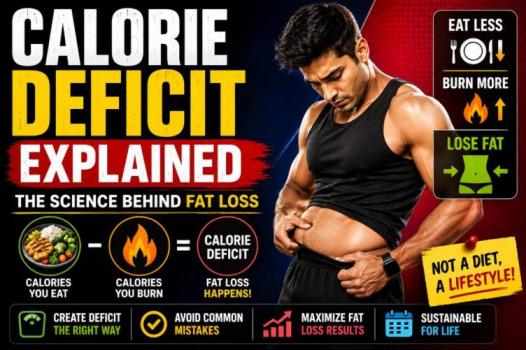
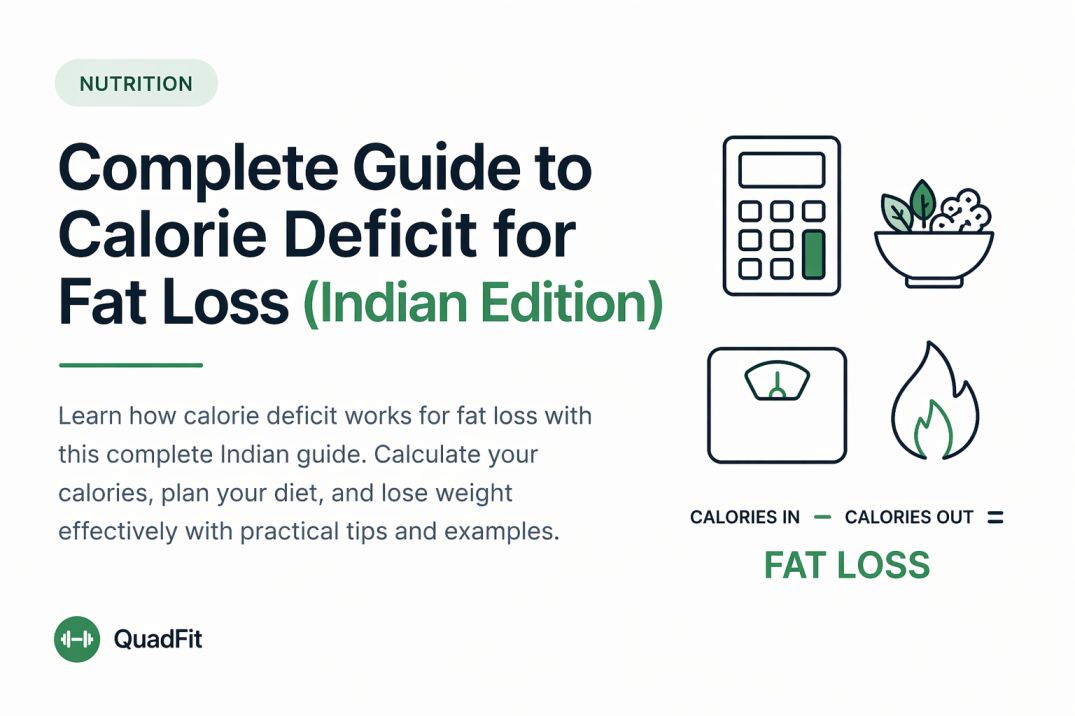
A calorie deficit simply means consuming fewer calories than your body burns in a day. When this happens, your body turns to stored fat for fuel — and that's how fat loss happens.
1 kg of body fat = approximately 7,700 calories.
So to lose 1 kg of fat per week, you need a deficit of roughly 1,100 calories per day. That's aggressive and unsustainable for most people. A more realistic and healthy target is 0.5 kg per week, which requires a daily deficit of about 550 calories.
But here's the catch: to create the right deficit, you first need to know how many calories your body actually needs. That's where BMR and TDEE come in.
Step 1 — Know Your BMR (Basal Metabolic Rate)
Your Basal Metabolic Rate (BMR) is the number of calories your body burns at complete rest — just to keep you alive. Breathing, circulation, cell repair, temperature regulation — all of it costs energy even if you lie in bed all day.
BMR is influenced by:
- Age — metabolism slows slightly as you get older
- Gender — men generally have higher BMR due to more muscle mass
- Height and weight — bigger bodies burn more at rest
- Body composition — muscle tissue burns more calories than fat tissue
The most commonly used formula is the Mifflin-St Jeor equation:
- Men: BMR = (10 × weight in kg) + (6.25 × height in cm) − (5 × age) + 5
- Women: BMR = (10 × weight in kg) + (6.25 × height in cm) − (5 × age) − 161
Let's take an example: a 28-year-old Indian man, 75 kg, 175 cm tall.
BMR = (10 × 75) + (6.25 × 175) − (5 × 28) + 5 = 750 + 1093.75 − 140 + 5 = 1,708 calories
This is the bare minimum his body needs to function. But nobody lies still all day.
👉 Calculate your BMR instantly: quadfit.info/tools
Step 2 — Calculate Your TDEE (Total Daily Energy Expenditure)
Your TDEE is your BMR multiplied by an activity factor. This is the real number — the total calories you burn across the whole day including work, exercise, walking, household chores, and even fidgeting.
| Activity Level | Description | Multiplier |
|---|---|---|
| Sedentary | Desk job, little to no exercise | BMR × 1.2 |
| Lightly Active | Light exercise 1–3 days/week | BMR × 1.375 |
| Moderately Active | Exercise 3–5 days/week | BMR × 1.55 |
| Very Active | Hard exercise 6–7 days/week | BMR × 1.725 |
| Extra Active | Physical job + intense daily training | BMR × 1.9 |
Using our example (BMR = 1,708):
- If he has a desk job and walks occasionally → TDEE = 1,708 × 1.375 = 2,348 calories/day
This is his maintenance calorie level — eat this much and his weight stays the same.
To lose fat, he needs to eat below this number.
👉 Get your TDEE in seconds: quadfit.info/tools
Step 3 — Set Your Calorie Deficit
Now that you know your TDEE, creating a deficit is straightforward. The key is choosing the right size of deficit.
Aggressive deficit (700–1000 kcal below TDEE): Faster weight loss but comes with muscle loss, fatigue, hormonal disruption, and is very hard to sustain. Not recommended for most people.
Moderate deficit (400–600 kcal below TDEE): The sweet spot. Sustainable, preserves muscle, and produces consistent fat loss of 0.4–0.6 kg per week. This is what most fitness professionals recommend.
Mild deficit (200–300 kcal below TDEE): Very slow progress but easy to maintain. Good for people close to their goal or those with a lot of stress.
For our example:
- TDEE = 2,348
- Target calories = 2,348 − 500 = 1,848 calories/day
Eat 1,848 calories consistently, and he'll lose approximately 0.5 kg of fat per week.
The Indian Diet Challenge
Here's where it gets India-specific. Indian food is delicious, culturally rich, and deeply tied to family and social life. But it also comes with some nutritional blind spots when it comes to fat loss.
High carbohydrate load: Rice, roti, poha, upma, idli — these are staples but they're carb-dense. A 3-roti meal with sabzi and dal can easily cross 600–700 calories.
Cooking oils: Indian cooking uses generous amounts of ghee, mustard oil, and refined oils. One tablespoon of ghee = ~120 calories. It adds up faster than people realize.
Hidden calories in "healthy" foods: Dry fruits, peanuts, coconut chutney, and full-fat curd are all nutritious — but calorie-dense. Many people snack on these believing they're eating light.
Low protein intake: Traditional Indian vegetarian meals are often predominantly carbs and fat with insufficient protein — dal being the main source, which isn't very protein-dense per serving.
None of this means you need to give up Indian food. It means you need to be aware of portions and make small, strategic adjustments.
Step 4 — Protein: The Most Important Macro for Fat Loss
If there's one macro that makes or breaks a fat loss plan, it's protein.
Here's why protein is non-negotiable:
- Preserves muscle during a deficit — without enough protein, your body breaks down muscle for energy
- High thermic effect — your body burns 20–30% of protein calories just digesting it
- Keeps you full — protein is the most satiating macronutrient, reducing hunger and cravings
- Supports recovery — especially important if you're training
How much protein do you need?
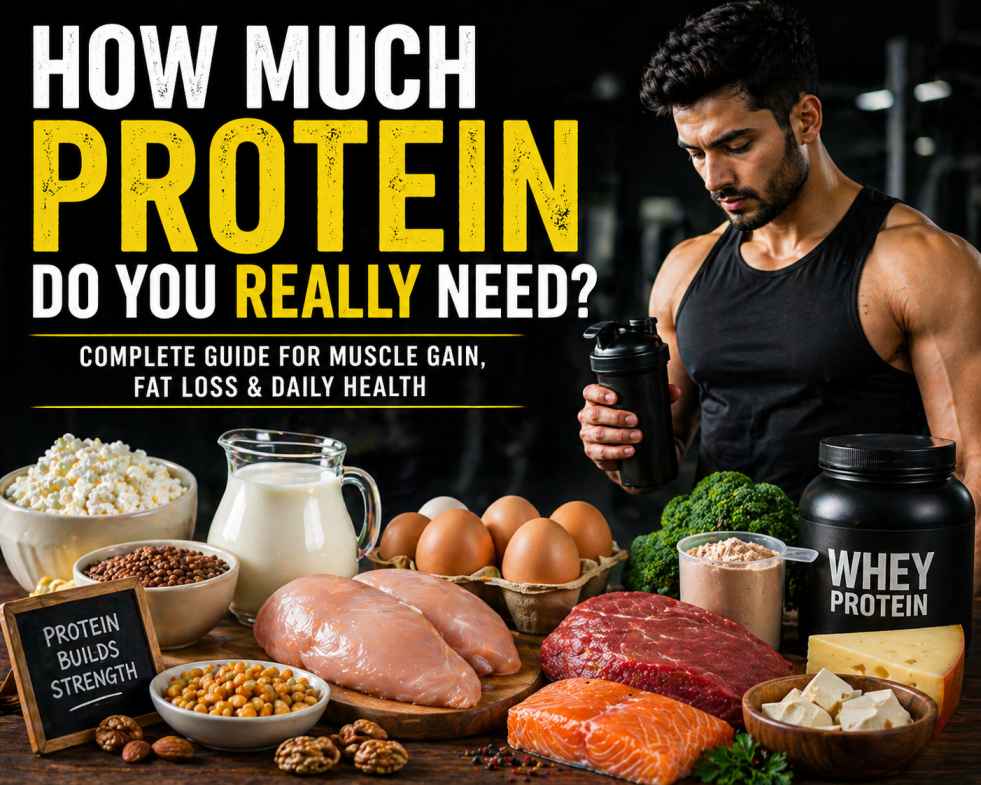
The general recommendation for fat loss is 1.6 to 2.2 grams of protein per kg of body weight per day.
For our 75 kg example: 75 × 2 = 150 grams of protein per day
That might sound like a lot. For context, here's what 150g of protein looks like in an Indian diet:
| Food | Protein |
|---|---|
| 200g paneer | ~36g |
| 2 cups cooked dal | ~18g |
| 3 whole eggs | ~18g |
| 1 cup Greek yogurt | ~10g |
| 100g chicken breast | ~31g |
| 1 scoop whey protein | ~24g |
With smart food choices, 150g is very achievable — even for vegetarians — but it requires intention.
👉 Use the Protein Calculator at quadfit.info/tools to find your exact protein target based on your weight and goals.
Best High-Protein Indian Foods for Fat Loss
Vegetarian sources:
- Paneer — 18g per 100g, versatile, widely available
- Soya chunks (nutrela) — 52g per 100g dry weight, the highest plant protein in Indian cooking
- Chana (chickpeas) — 9g per 100g cooked, high fiber too
- Moong dal — one of the easiest to digest, good for morning meals
- Greek yogurt / hung curd — 10g per 100g, works as a snack or raita
- Tofu — 8g per 100g, great in stir-fries and bhurji-style dishes
Non-vegetarian sources:
- Chicken breast — 31g per 100g, lean, affordable
- Eggs — 6g per egg, cheapest complete protein in India
- Fish (rohu, katla, surmai) — 20–25g per 100g, excellent omega-3 profile
- Egg whites — for those who want protein without extra fat
Practical Indian Meal Plan for a 1,800 Calorie Deficit Diet
Here's a sample day for someone targeting ~1,800 calories with high protein:
Morning (7 AM)
- 3 whole eggs bhurji with 1 roti + black coffee
- ~400 calories, 25g protein
Mid-morning (10 AM)
- 1 cup Greek yogurt + handful of almonds (10–12 pieces)
- ~250 calories, 12g protein
Lunch (1 PM)
- 1 cup cooked rice + 1.5 cups dal + sabzi (palak, lauki, or beans) + salad
- ~500 calories, 20g protein
Evening Snack (4:30 PM)
- 1 scoop whey protein in water OR 100g paneer tikka
- ~150–200 calories, 24–30g protein
Dinner (7:30 PM)
- 2 rotis + 150g chicken curry or 150g soya sabzi + raita
- ~500 calories, 35g protein
Total: ~1,800 calories | ~120–140g protein
Adjust portions based on your personal TDEE and deficit target.
Common Mistakes Indians Make When Trying to Lose Fat
Skipping meals: Skipping breakfast or lunch often leads to overeating at dinner. It also tanks energy and focus during the day.
Drinking calories: Chai with 2 teaspoons of sugar, 3 times a day = 150+ extra calories. Fruit juices, lassi, and cold drinks add hundreds of calories that people completely ignore.
Too much ghee and oil: Traditional cooking norms often call for 2–3 tablespoons of oil per dish. Reducing this to 1 tablespoon per meal can save 200–300 calories a day.
Eating "healthy" in unlimited amounts: Brown rice is healthier than white rice, but it still has almost the same calories. "Healthy" doesn't mean calorie-free.
Not tracking: Most people wildly underestimate how much they eat. Tracking calories for even 2–4 weeks builds a lasting intuition for portions.
How to Use the QuadFit Calculators
Everything covered in this guide — BMR, TDEE, protein requirements — can be calculated in one place at quadfit.info/tools.
Here's how to use them:
- Go to quadfit.info/tools
- Enter your age, gender, height, and current weight
- Select your activity level honestly (most office workers are "sedentary" or "lightly active")
- Get your BMR, TDEE, and recommended calorie intake for fat loss
- Use the protein calculator to find your daily protein target
It takes under two minutes and gives you the exact numbers to start your fat loss journey today — no guesswork, no generic advice.
Putting It All Together
Fat loss doesn't require exotic diets, expensive supplements, or giving up dal chawal. It requires understanding three numbers: your BMR, your TDEE, and your protein target.
Once you know these, the strategy is simple:
- Eat 400–500 calories below your TDEE
- Hit your protein target every day
- Be consistent for 8–12 weeks
The Indian diet has everything you need to succeed — lentils, paneer, eggs, vegetables, and spices that make eating a joy. The only thing missing was the framework.
Now you have it.
👉 Start with your numbers: quadfit.info/tools